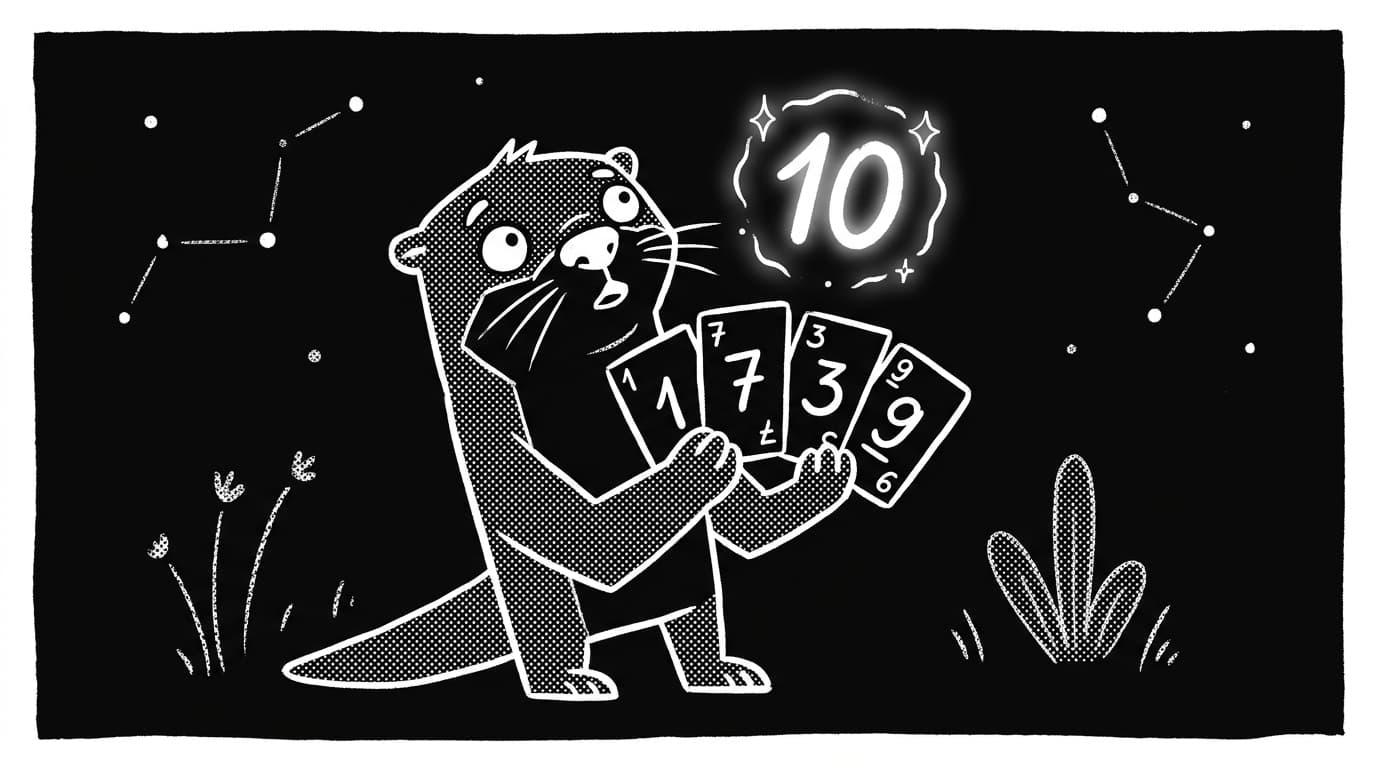
All Ten Solver 2026: Solutions for Every 10-to-10 Puzzle
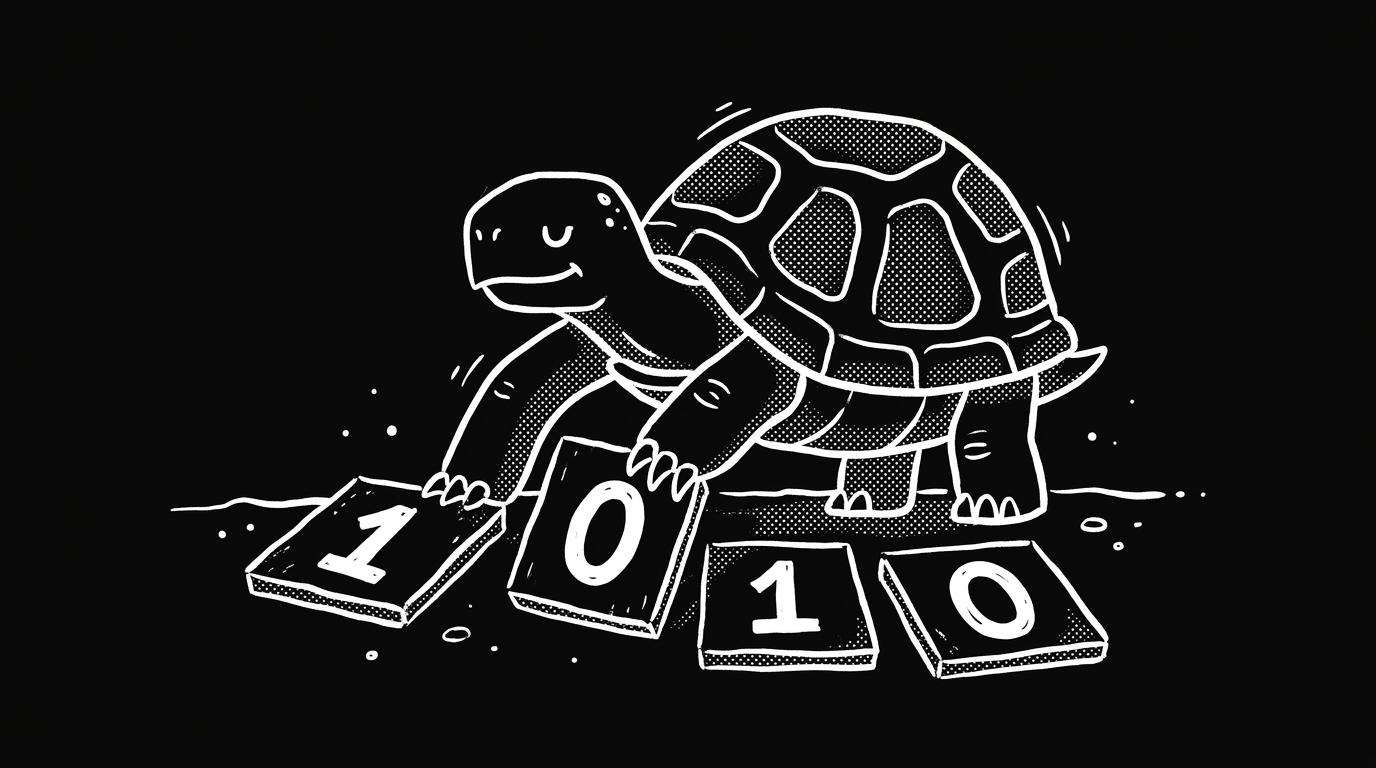
You spot a four digit number on a train ticket or license plate, and the challenge is to turn those four digits into exactly 10 using plus, minus, times, divide, and parentheses, with each digit used once. The puzzle sits inside most mental math apps including ours, but no page on the blog walks a full solver routine. This post lays out a three pass method, twelve worked hands across every difficulty tier, and the small family of starters that have no legal solution.
The Rules In Thirty Seconds
Each digit from the four slots appears once in the final expression. Legal operations are plus, minus, multiply, divide, with parentheses to control order. Strict rules ban concatenation, so a 1 and a 9 cannot be read as 19. Decimals, factorials, and exponents also sit outside the standard ruleset. The target is 10 exactly, not within a tolerance. A hand of four zeros has no solution because every operation on zeros collapses the result to zero, which the solver catches in pass one.
The Three Pass Solving Routine
Pass one is pure addition and subtraction. Sum the four digits in your head. If the total lands on 10, write the hand as a plus b plus c plus d and finish. If the total overshoots by a value equal to twice one of the digits, flip that digit to negative and the sum still lands on 10. A hand of 1, 2, 3, 4 solves this way in under a second, and the sister guide at our Countdown numbers solver runs the same cheapest first principle for the six digit variant.
Pass two layers in one multiplication or division. Scan the four digits for a pair whose product or quotient leaves a workable residue toward 10. Given 2, 3, 5, 1, note that 2 times 3 equals 6, then 6 plus 5 minus 1 equals 10. The presence of a 1 helps, because any value times 1 stays itself, so a 1 can act as filler inside any slot. A 0 can sit only in an addition slot or as a multiplier, never as a divisor, because division by zero breaks the expression.
Pass three builds nested expressions. Templates like (a plus b) times (c minus d), or (a minus b) times (c plus d), or a divided by b plus c plus d, cover most remaining hands. When neither pass one nor pass two produces 10, test the three templates in order, starting with the outer multiplication form because it reaches 10 most often on mid range sums. If all three templates fail on every digit permutation, the hand belongs to the no solution set covered in a later section.
Twelve Worked Hands From Easy To Hard
The twelve hands below show the pass that solves each. Pass one hands clear by addition and subtraction. Pass two hands need one product or quotient. Pass three hands lean on nested parentheses. Each solution uses every digit exactly once, and the order of digits inside the expression does not have to match the order on the ticket.
- 1, 2, 3, 4: 1 + 2 + 3 + 4 = 10 (pass one, pure addition)
- 2, 2, 3, 3: 2 + 2 + 3 + 3 = 10 (pass one)
- 5, 2, 2, 1: 5 + 2 + 2 + 1 = 10 (pass one)
- 7, 2, 1, 0: 7 + 2 + 1 + 0 = 10 (pass one, with a zero carrier)
- 6, 3, 2, 1: 6 + 3 + 2 - 1 = 10 (pass one with subtraction)
- 9, 5, 2, 2: 9 + 5 - 2 - 2 = 10 (pass one with subtraction)
- 2, 3, 5, 1: 2 × 3 + 5 - 1 = 10 (pass two, one product)
- 8, 1, 2, 0: 8 × 1 + 2 + 0 = 10 (pass two, 1 as filler)
- 4, 2, 3, 1: 4 × 2 + 3 - 1 = 10 (pass two)
- 6, 2, 2, 2: (6 - 2) × 2 + 2 = 10 (pass three, outer multiplication)
- 9, 3, 2, 2: (9 - 3) × 2 - 2 = 10 (pass three)
- 8, 4, 2, 2: (8 - 4) × 2 + 2 = 10 (pass three)
The No Solution Family
A small number of hands have no legal path to 10 under strict rules. A hand of four ones caps at 4 by addition and at 1 by multiplication, so no arrangement reaches 10. A hand of four zeros collapses to zero on every legal operation. A hand of 1, 1, 1, 2 maxes at 2 × (1 + 1 + 1) = 6, which the ceiling check catches in seconds. The ceiling check is simple: sum the digits, then compute the largest doubled or tripled product you can form, and if both miss 10, abandon the hand.
Combinations containing three or more zeros also fail every pass, since multiplying by zero zeroes the whole expression and summing three zeros leaves only one non zero digit to carry the hand. Learn the five or six caps by heart and the live solve time drops, because you stop hunting for a nonexistent answer. The recurring unsolvable shapes are 0, 0, 0, 0 and 1, 1, 1, 1, plus the low cap combinations 1, 1, 1, 2 and 0, 0, 0, N for small N.
Fourteen Day Drill Plan
Days one through three stay on pass one hands, pulled from the daily board feed with addition and subtraction only. Days four through seven add pass two, one multiplication per hand, with the 1 as filler drill run twenty times a day. Days eight through fourteen allow pass three nesting with parentheses. Target a solve rate of thirty hands per minute by day fourteen, which clears most casual puzzles live at the ticket counter. The menu filter lets you narrow boards to four digit draws so the drill matches the puzzle shape.
Keep a small notebook of the hands that defeat you on first attempt, then review them at the end of each week. A pattern of failure almost always points to one missing template, usually the outer multiplication form, and twenty minutes of focused practice on that template closes the gap. The hands that keep defeating you after three review passes are the no solution family, which should go on a separate page of the notebook so you stop wasting live solve time on them.
Where The All Ten Puzzle Shows Up
Commuters in Tokyo play this on four digit train ticket serial numbers, where the puzzle carries the nickname tenpuzzle. London tube riders run the same drill on four digit station exit codes. Cab riders play on the four digit tail of taxi plates. The puzzle attaches to any four digit source the environment supplies, which is why the method survives long after the specific ticket format changes. Spanish lottery tickets carry five digit serials, so a common variant drops the smallest digit and solves for 10 on the remaining four.
The leaderboard tracks fastest solve times among players who run the four digit drill daily, and the top band lives around three seconds per hand on pass one, around seven seconds on pass two, and under twenty seconds on pass three. Those numbers set a realistic ceiling for a motivated player after the full fourteen day plan, and anyone chasing them should run the drill at least once in the morning and once before bed to lock the templates into long term memory.