How to Play Mathness: Rules, Scoring & Strategy
Mathness is a fast, competitive number puzzle: you get one target number and five starting numbers, and you combine them with the four basic operators to land as close to the target as you can. A round takes about a minute. This guide covers the rules, exactly how scoring works, and a handful of strategies that move you up the board.
The rules in 30 seconds
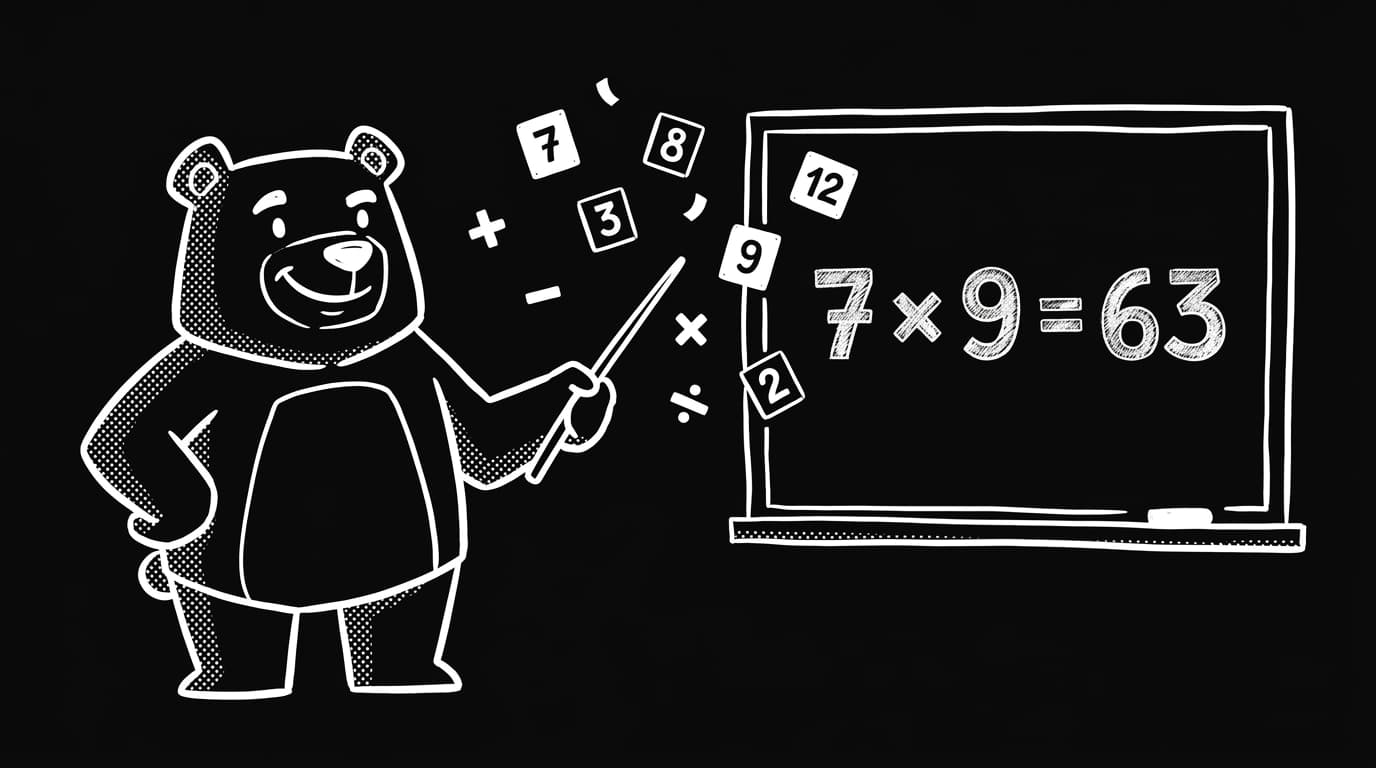
- You're shown a target number (say, 63) and five numbers (say, 7, 8, 3, 9, 12).
- Combine them with +, −, × and ÷ to build an expression.
- Each of the five numbers can be used at most once — you don't have to use all of them.
- Standard order of operations applies (× and ÷ before + and −).
- Get as close to the target as possible. An exact hit earns a big bonus, but a near miss still scores.
For example, with a target of 63 you could play 7 × 9 = 63 for an exact match using just two numbers — efficient and accurate. Want to try one right now? Play a free round and come back.
How scoring works
Mathness doesn't just reward the right answer — it rewards how you got there. Your score is the sum of several fronts, up to a maximum of 1,350 points per round:
- Accuracy — how close your result is to the target. An exact match unlocks the largest single bonus.
- Speed — faster submissions score more, on a 60-second curve. Hesitation costs points.
- Numbers used — using more of the five available numbers is worth more than a bare two-number solution.
- Step efficiency — fewer operators for the same result scores higher. Elegance pays.
- Variety — mixing different operator types (not just repeated addition) earns a bonus.
Five strategies to score higher
- Hunt for the exact match first. Scan for two or three numbers that multiply or add straight to the target before settling for "close enough."
- Work backward from the target. Ask "what times what is near 63?" (7 × 9) instead of randomly combining tiles forward.
- Use division to bridge gaps. When you're a little over, dividing by one of the remaining numbers can snap you onto the target.
- Don't over-spend numbers. If two numbers nail it exactly, extra steps only add risk and time. But if you're short of exact, spending more numbers can earn the "numbers used" bonus.
- Practice mental math. Speed comes from arithmetic you don't have to think about — see our 7 mental math tricks for drills that translate directly into faster rounds.
Three ways to play
Once you've got the basics, there are three modes:
- Solo — unlimited fresh puzzles. Every submission feeds the global leaderboard.
- Daily — one shared puzzle for everyone, one attempt. Great for building a streak. Try today's puzzle.
- Challenge — duel a friend on the same puzzles and see whose math is sharper.
That's everything you need. The fastest way to actually get the scoring is to play a few rounds and watch the breakdown after each one.