Mental Math for Shopping: Unit Prices, Bulk Deals, and Stacked Discounts
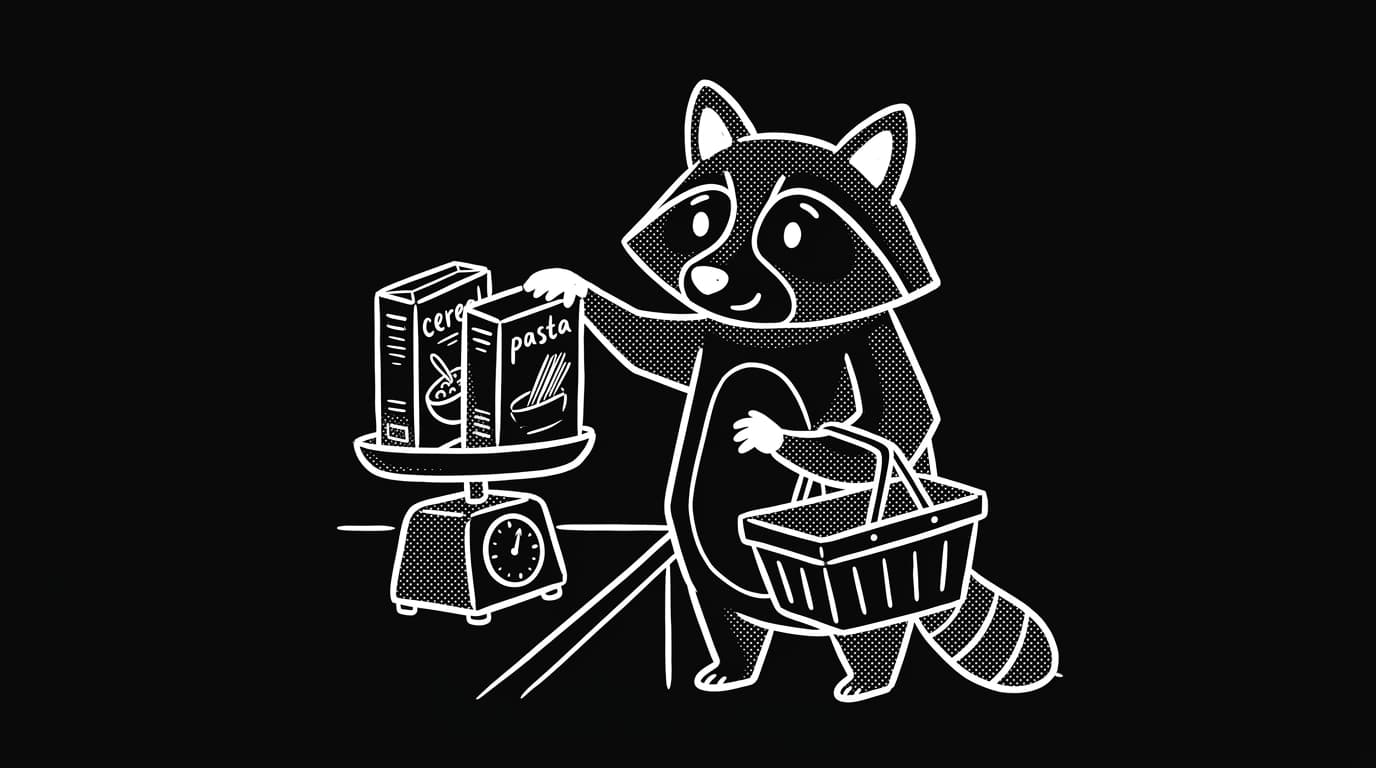
The two-pound bag costs $6.40 and the six-pound bag costs $18.90, and the shelf tag under the second one is missing. Every full cart holds ten to fifteen decisions like that, each one worth 5 to 40 cents, and a phone calculator never gets asked. Mental math for shopping is the thin layer between the sticker and the receipt, and it moves real money over a year. The methods below cover unit pricing, bulk math, stacked discounts, sales tax, and the small store tricks that hide the losing option.
Unit Price in One Division You Can Do Standing Up
The unit price is dollars divided by units, and the trick is rounding both numbers before you divide. Round the price to the nearest ten cents and the size to a friendly number, then do one clean division. A $6.40 two-pound bag becomes 640 cents over 2, or 320 cents per pound. A $18.90 six-pound bag becomes 1890 cents over 6, which splits as 1800 over 6 plus 90 over 6, or 300 plus 15, so 315 cents per pound. The bigger bag beats the smaller by 5 cents per pound, worth 30 cents on the six-pound purchase, which is a slim margin worth checking. Reach for percentage shortcuts when the size does not divide cleanly, since 10 percent moves cover most ugly numerators in one step.
The Bulk Discount Test That Catches Fake Deals
Bulk pricing lies about half the time in US grocery chains, especially on paper goods and pet food. The test is a two-ratio compare, not a division. Divide the family-size price by the small-size price, then compare that number to the size ratio. A $12 family box holding 32 ounces against a $5 small box holding 12 ounces gives a price ratio of 2.4 and a size ratio of 2.67, so size beats price and bulk wins. Flip either ratio and the small box wins by a nickel per ounce. A $9 club-pack of coffee weighing 24 ounces against a $4 grocery bag weighing 12 ounces gives price ratio 2.25 against size ratio 2.0, so the small bag wins on unit cost by roughly 6 percent.
Run this twice a week for a month and the reflex sticks under two seconds. Chains rotate which SKU wins per quarter, so a check from six months ago is not a memory to trust. Store-brand versus name-brand adds another layer: the store brand almost always wins on unit price but not on protein, fat, or fiber per dollar, which is the honest metric on dense foods.
Stacked Discount Math Without a Spreadsheet
A 20 percent off tag combined with a 10 percent member coupon is not 30 percent off. Multiply the remaining fractions instead: 0.8 times 0.9 equals 0.72, so the shopper pays 72 cents on the dollar and saves 28 cents, not 30. Two 25 percent stacks give 0.75 squared, or 0.5625, an effective 43.75 percent discount rather than 50. Three 10 percent stacks give 0.9 cubed, or 0.729, a 27.1 percent effective discount rather than 30. Cashiers and receipt totals get this wrong constantly, and the error always favors the store.
The formula for two stacks is (1 minus a)(1 minus b), and for three it is (1 minus a)(1 minus b)(1 minus c). Compute left to right and round only at the end to keep the error under a penny. See tips, discounts, and splitting the bill for the restaurant version of the same identity, where a 20 percent tip on a post-discount total is a different number than 20 percent on the pre-discount total.
Sales Tax and Total in One Pass
For a 7 percent tax rate, the total is the price plus 7 percent of the price, done as one addition. A $46 subtotal plus 7 percent of 46 is 46 plus 3.22, or $49.22. For an 8.875 percent rate like New York City, multiply by 1.09 and subtract 12 cents per $10 of subtotal, which lands within a penny. For a flat 10 percent like some Los Angeles combined restaurant totals, shift one digit: $46 becomes $50.60. Memorize the multiplier for the state and city where the shopping happens and the tax step collapses to a two-second add on every receipt.
The same trick runs backward for pre-tax price when the total is posted with tax included. Divide by 1.07 by multiplying by 0.935 in your head, which is 1 minus 6.5 percent, close enough for a mental check inside 5 cents on a $50 total. This matters at gas pumps and abroad, where posted totals include the tax and the pre-tax number is the one the receipt splits.
The Ten-Second Grocery Drill
- Pick two competing sizes of any product on the shelf, ideally same brand.
- Round each price to the nearest ten cents and each size to a friendly number.
- Do one division per bag for the unit price in cents per unit.
- Compare to the shelf-tag unit price when posted (US chains print it left-justified per state law) and note the mismatch.
- Log the delta in a phone note for one week, tracking which brands mispost most often.
Ten seconds per aisle over one shop adds about two minutes to the trip and returns two to five percent of the total bill on brands that mispost. Over a $600 monthly grocery budget that is $12 to $30 back with no coupon clipping. Practice the drill at every stop for two weeks and it moves from conscious math to background reflex. Bring the same reactive arithmetic into daily target-number practice and both skills reinforce each other, since the underlying move is fast division and quick comparison against a known anchor.
Traps That Break Mental Estimates
Store math has patterns worth recognizing instead of computing. A "buy one get one 50 percent off" tag is a 25 percent discount on two items, not 50 percent, because the discount applies to half the purchase. A "3 for $10" against $3.79 each favors the bundle only when the third unit would enter the cart anyway, otherwise it is a $6.63 spend to save 63 cents. A "member price" that requires an app account for $0.20 off is a paid-labor conversion, not a discount, and the app collects purchase history worth more than the coupon. Coupons that require a $50 minimum push the cart above what the trip planned, which is the entire point of the minimum.
The last trap worth flagging is the endcap display. Endcap prices are usually the same as shelf prices for the same SKU, not lower, and the display is paid for by the brand. Check the shelf tag on the aisle before assuming the endcap is a deal. The main menu has arithmetic drills that lock the reflexes above under time pressure, which is the closest simulation of a busy checkout line.