The Mental Number Line: How Your Brain Maps Numbers to Space
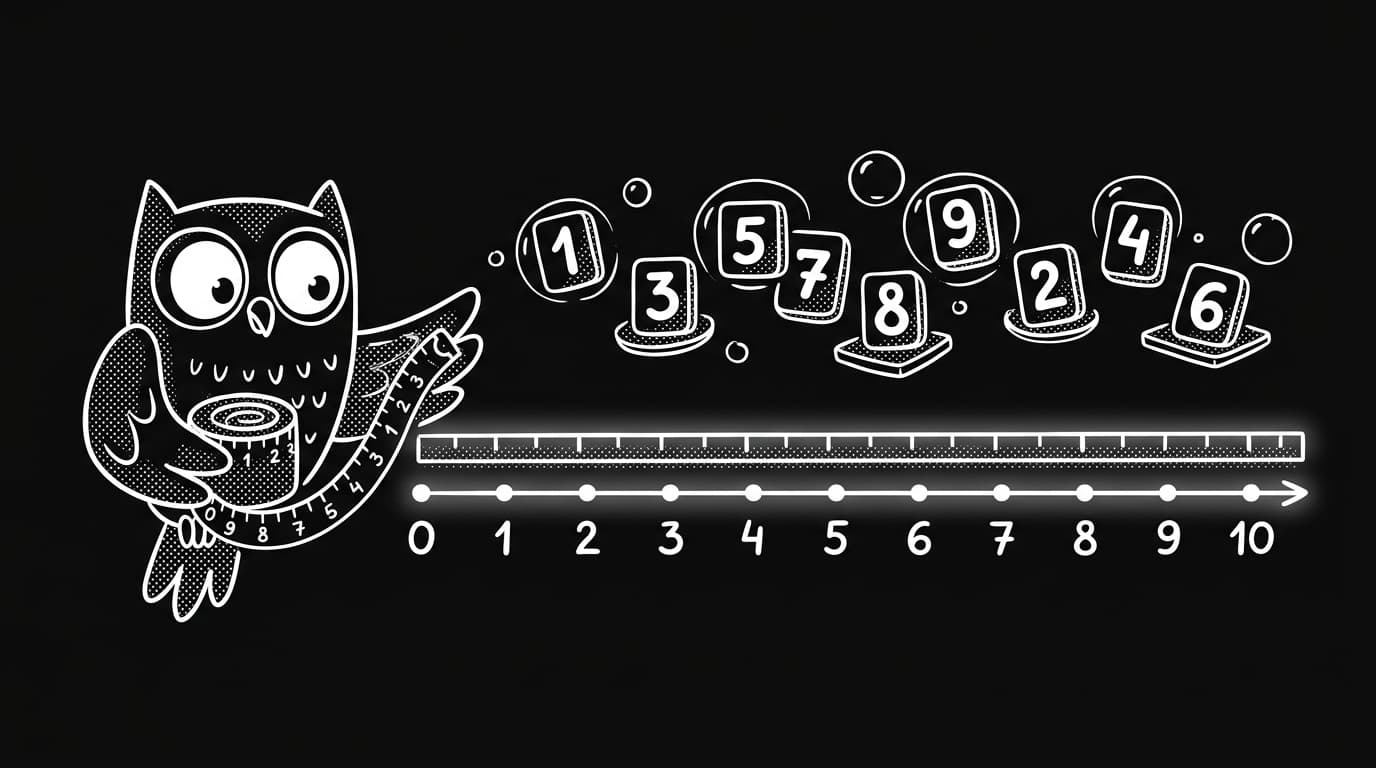
Your brain files numbers along an invisible line that runs left to right, with small values anchored on the left side of attention and larger ones on the right. Stanislas Dehaene measured the effect in 1993 and it has replicated across every left-reading culture tested since. For anyone training mental math, the mental number line is the substrate every shortcut sits on top of, and the drills that reinforce it build real speed.
What the Mental Number Line Is
The mental number line is a cognitive map that assigns each number a spatial location along a horizontal axis. Dehaene's 1993 study asked French subjects to classify digits as odd or even by pressing a left or right key, and small numbers were answered 20 milliseconds faster with the left hand while large numbers were answered 20 milliseconds faster with the right. The gap held even when subjects were never told to think about size. Follow-up work with macaques, preverbal infants, and Amazonian tribes without formal schooling confirms the spatial mapping is partly innate, not a reading artifact. The line is not evenly spaced, and smaller numbers sit further apart in the brain's representation than larger ones, especially before age ten.
The SNARC Effect, Measured in Milliseconds
SNARC stands for Spatial Numerical Association of Response Codes, the technical name for the left-small, right-large bias. The effect size is small but reliable, around 15 to 25 milliseconds per trial across more than 200 published studies. It flips in cultures that read right to left, like Arabic and Hebrew readers, which is one of the strongest clues that formal reading direction tunes the innate line. Blind subjects tested with spoken digits show the SNARC effect too, so it is not purely visual. The strongest version appears in pairwise comparison tasks, where subjects respond faster when the larger number sits on the physical right of the screen.
Why the Line Compresses With Size
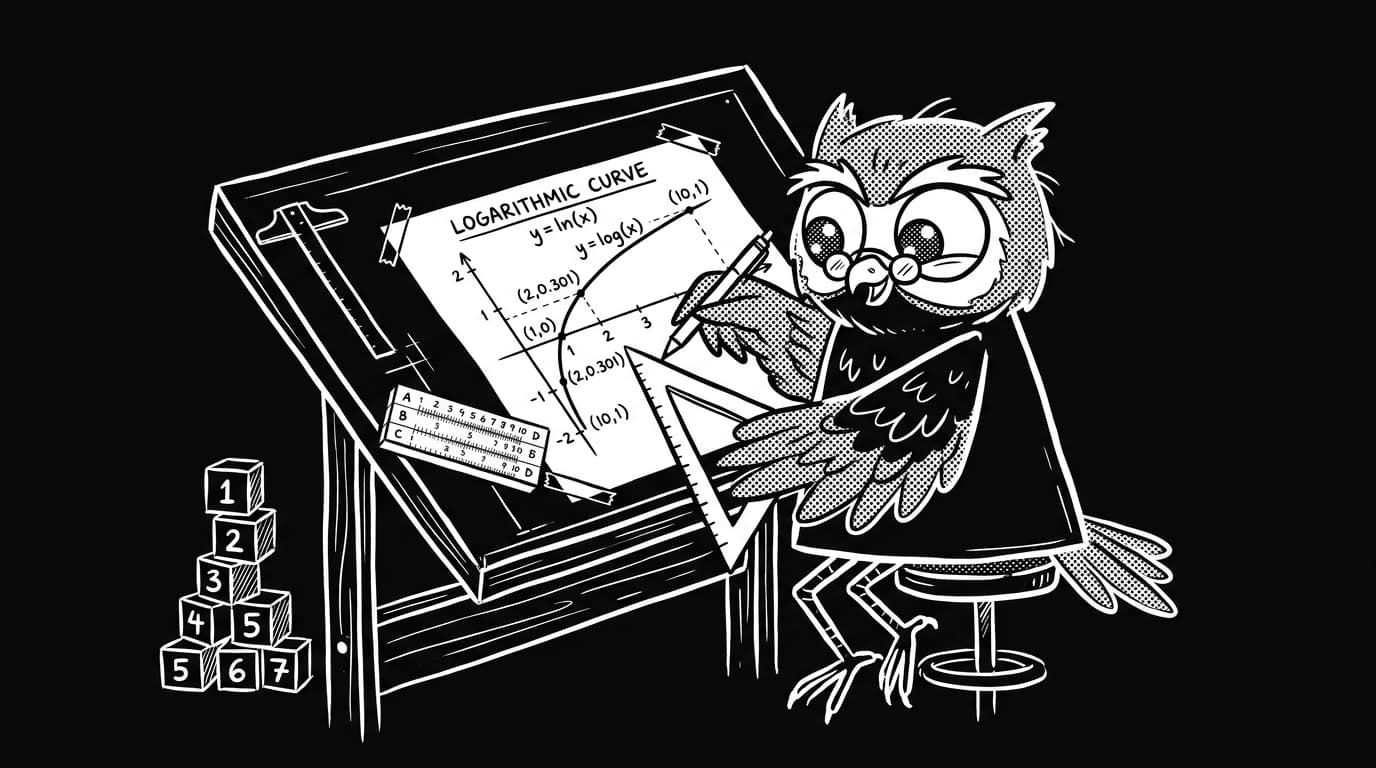
Young children represent numbers logarithmically. Ask a first grader to mark where 10 sits on a line from 0 to 100, and they often place it near 30, because 10 feels much larger relative to 1 than it does to 100. By third grade, most children shift to a linear representation on the 0 to 100 range, and by sixth grade they handle 0 to 1000 linearly. Adults slip back into logarithmic thinking under cognitive load, which explains why estimation errors blow up on unfamiliar scales. The Weber-Fechner law captures the principle. Discrimination between two quantities depends on their ratio, not their absolute difference, so 90 versus 100 feels nearly identical while 1 versus 10 feels enormous.
What This Means for Mental Math Training
Every shortcut built on anchor numbers piggybacks on the mental number line. When a player holds 50 as a reference point and judges whether 47 times 3 lands above or below 150, they are using the line to bracket the answer before computing. The same thing happens in Fermi estimation, where a chain of order-of-magnitude guesses only works because the brain treats powers of ten as evenly spaced beads on a longer bar. Research by Robert Siegler shows that number-line fluency in grade two predicts standardized math scores through grade five with correlations near 0.5. Training the line explicitly speeds up every downstream task that depends on comparison, rounding, or bracketing.
Three drills reinforce the line in under five minutes a day. The point is not to perfect any single answer, it is to sharpen the perceptual read that fires before conscious computation starts.
- Blank-line estimation: mark where a target number sits on a 0 to 1000 bar, five placements a day, with instant feedback on the error in units.
- Pairwise comparison: call out the larger of two numbers within 500 milliseconds, pulled from a mixed deck spanning 1 to 1000.
- Target-bracket work in Mathness, where every round opens by naming two anchor numbers the target sits between before any computation begins.
Where the Research Stops Short
Not every popular claim about the mental number line survives replication. The idea that training number-line estimation alone transfers to broad math achievement failed to replicate in two large school studies published after 2018, with effect sizes shrinking from 0.4 to near zero when samples grew past 500 students. The SNARC effect itself is robust, but its practical implications for classroom teaching are smaller than early popular books suggested. What does survive scrutiny is the finding that children with weaker number-line representations in grade two score lower on standardized math tests through grade five, which makes early number-line fluency a reasonable screening target even if it is not a magic lever for later achievement.
Daily Practice That Uses the Spatial Map
The daily Mathness puzzle exploits spatial-numeric overlap by presenting a target and a tile set that the brain starts bracketing on sight. Over weeks of repetition, bracketing before computation turns the slow conscious estimate into a fast perceptual read, which is the hallmark of expert number processing. Scott Flansburg described this in interviews as seeing where the answer lives before he computed it. The Mathness leaderboard rewards exactly this reflex, because the clock on each round punishes any player who tries to compute without first bracketing the target. Five minutes of mixed estimation and comparison drills before a ranked session measurably lifts first-ten-round accuracy.