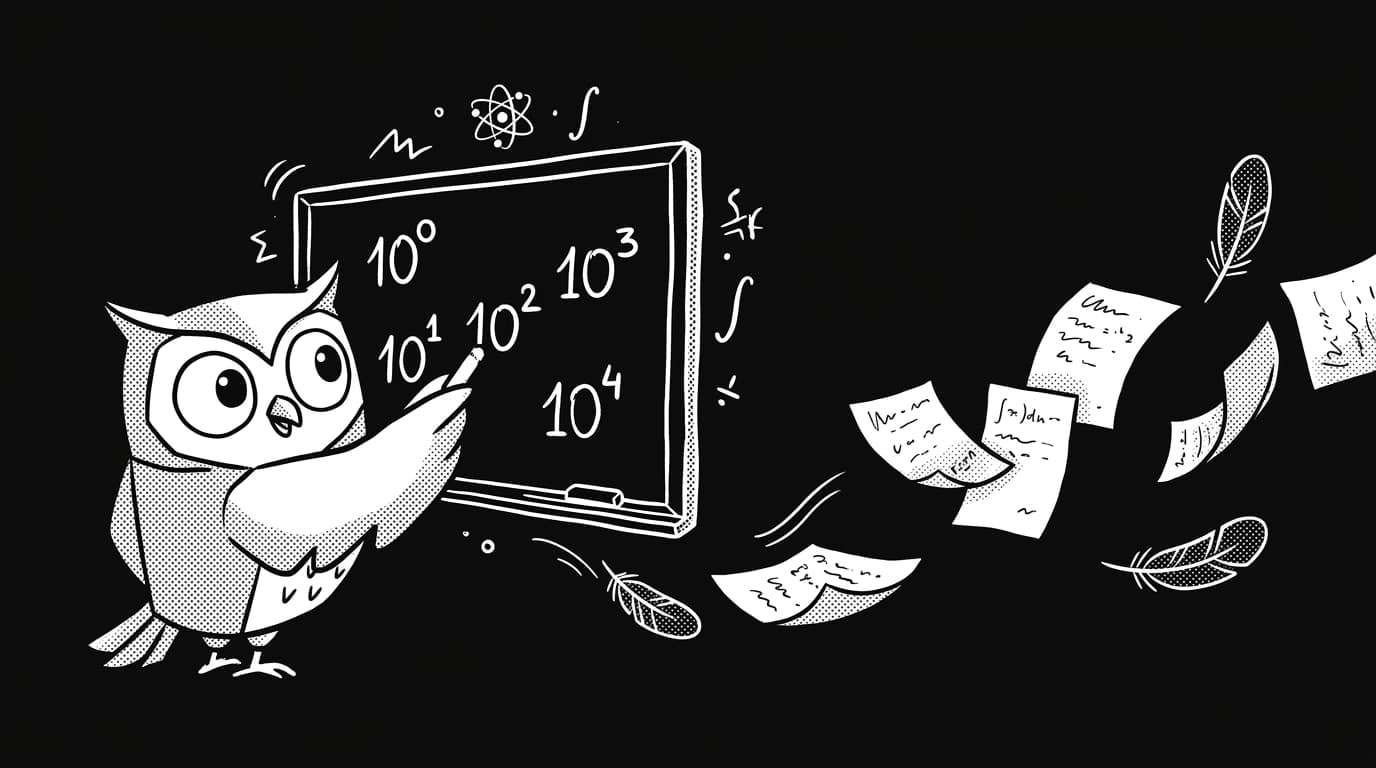
Estimation in Mathness: Bracket the Target Before You Compute
Most Mathness rounds get lost in the first six seconds, when players start computing before they know whether the target is reachable. Estimation is the bridge. A two-second bracket on the target tells you how close you can get, which operations are in play, and whether to commit or skip. The technique takes seven days to install and saves three to five seconds on every round after that.
Why Estimation Beats Raw Computation
Computation is expensive. A two-digit multiplication burns three seconds, a long division burns four, and a wrong branch costs the round. Estimation costs almost nothing because it runs on round numbers. Round the tiles, round the target, run the operation in your head, compare the result to the goal. If the rounded answer lands within 10 of the target, the exact path is almost always there. If it lands 40 off, no clean path exists and the salvage play starts.
Most players skip estimation because it feels lazy. The reflex is to start on the first promising pair and check the answer at the end. That habit collapses on hard boards. The reachability check covers the bound question, but estimation goes one step further. It gives you a number to aim at, not a yes or no.
The Two-Bracket Method
Round each tile to the nearest 5 or 10. Round the target the same way. Pick the two largest tiles and run the heaviest operation, often multiplication, on the rounded pair. Compare the result to the rounded target. The gap is your bracket. If the gap is small, the remaining tiles fill it with addition or subtraction. If the gap is wide, you need a different opener.
Worked example. Tiles are 23, 47, 6, 9, 75, 100 and the target is 614. Round to 25, 50, 5, 10, 75, 100. The two largest are 75 and 100, and their product is 7,500, far past 614. Drop to 100 minus 25, times 6, which gives 450. The bracket says the target sits roughly 165 above 450, so the next move adds about 175, close enough to confirm a multiply-then-add structure. Now compute exactly. 23 times 47 alone lands at 1,081, too high; the bracket tells you to drop multiplication on those two and use 75 and 9 instead.
When to Estimate, When to Commit
Estimation is the first three seconds of the round, not the whole round. Run it once on the two largest tiles, once on the closest factor pair to the target, then commit. If both brackets land within 20 of the target, pick the cleaner one and start computing. If both land more than 50 off, the round is a salvage; take the four-front partial score and move on to the next board.
On ranked, the time pressure shifts the budget. Spend two seconds on the first bracket, one second on a backup, then commit at second four. The warm-up routine trains the speed of the bracket itself, so the four-second window stays honest. Players who skip warm-up burn six seconds on estimation and lose the round on the clock alone.
Estimation Tools That Work
- Round to 5 for tiles under 25, round to 10 for tiles above 25.
- Treat 75 as 3 times 25 and 100 as 4 times 25 for fast scaling.
- Treat any prime above 13 as its nearest round neighbor and correct the difference after.
- For division openers, round both numerator and denominator to the closest factor pair.
- For targets ending in 0 or 5, tighten the bracket to 5; for targets ending in odd digits, widen to 10.
These five tools cover roughly 80 percent of Mathness boards. The remaining 20 percent involve prime-heavy tile sets where rounding loses too much fidelity. On those boards, skip estimation and run the prime handling routine instead. The decision rule is two seconds: if more than three tiles are primes above 11, drop the bracket and go straight to additive paths.
Common Estimation Traps
The first trap is over-rounding. Rounding 23 to 25 is fine for a bracket, but rounding 47 to 50 inflates a product by 6 percent. Stacking two such rounds in a multiplication compounds to 12 percent, enough to mis-bracket a target by 70. The fix is to round one tile up and one tile down when both errors point the same way.
The second trap is committing to the bracket itself. The bracket is a direction, not a path. Players who commit too early force the rounded plan onto the real tiles and miss the true solution by a single operation. The fix is to compute the bracket, then look at the real tiles for one second before the first arithmetic move. The anchor number often appears in that second.
The third trap is ignoring parity after the bracket. A multiply-add bracket that lands on 614 with three odd tiles will not finish in one operation because the parity does not align. Confirm parity in the same breath as the bracket, not after the first computation has already burned two seconds.
Seven-Day Estimation Drill
Day one through three. Open Mathness, ignore the timer, and for each round say the bracket out loud before computing. Two largest tiles, one operation, compared to target. Twenty rounds a day. The goal is correct brackets, not speed.
Day four through five. Same drill with a four-second cap on the bracket alone. Aim for fifteen of twenty rounds bracketed in under four seconds. Day six. Play ranked rounds without writing anything down; the bracket should run silently. Day seven. Review the misses from day six and label each as a wrong bracket, an over-commitment, or a missed parity.
After seven days the bracket runs in the background while the real arithmetic starts. The /menu lists every mode that rewards the habit; ranked boards reward it most, because the saved seconds compound across twenty rounds and decide the leaderboard climb.