Handling Primes in Mathness: When a Tile Won't Factor
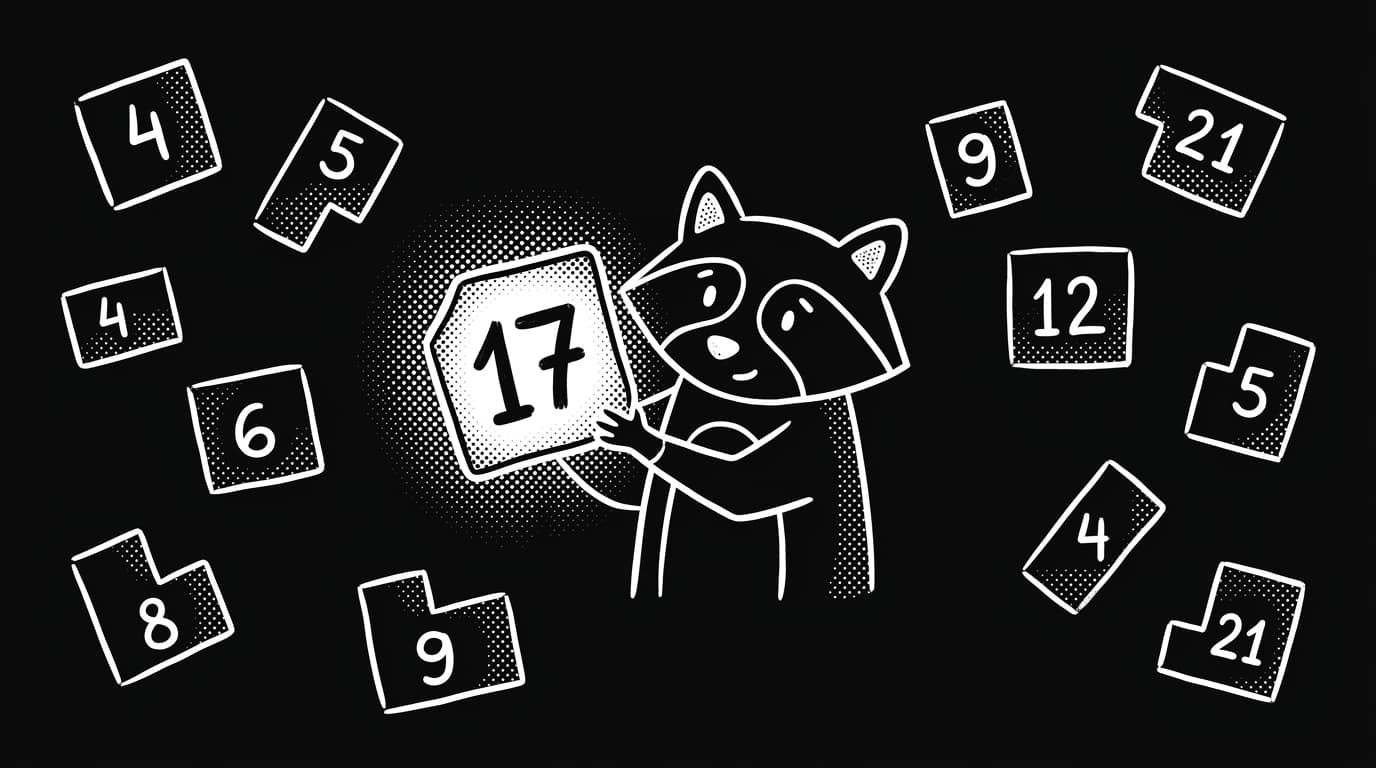
Prime tiles are the boards that freeze most Mathness players for four to six seconds while they hunt for a factor that does not exist. A 17, 23, or 41 sitting in the middle of a board cannot be split with division and rarely chains cleanly with multiplication, so the player who treats primes as multiplicative pieces stalls every time one appears. The fix is a small reflex set: recognise the prime on sight, switch to additive moves, and use the prime as an anchor rather than a problem. The five techniques below turn sticky primes into one-move plays on /daily and /menu rounds.
Why Primes Are Sticky on Mathness Boards
A prime number has exactly two divisors: 1 and itself. On a Mathness board that means the tile cannot be reduced by division against any other tile that is not equal to it, and it cannot be reached by multiplication of two smaller tiles unless one of them is 1. Players who default to multiplicative thinking lose two to four seconds per prime tile because they cycle through factor pairs that will never appear. Anchor numbers, doubling, and halving all fail on a raw prime, so the doubling and halving post does not rescue the round.
The cognitive cost is higher than the clock cost. A frozen player has spent working memory on a dead end, which carries into the next move and degrades the second-step decision as well. A 23 on the board followed by a wrong opener costs around seven seconds: four on the freeze, three on the recovery. That is enough to break a streak on a ranked round. Recognising the prime in under half a second is the gain that compounds.
The Small Prime List Every Player Memorises
Mathness boards draw tiles between 1 and 99 in most modes, so the operational prime set is twenty-five numbers long. Memorising them as a list rather than testing each tile for primality saves around a second per board. The list is: 2, 3, 5, 7, 11, 13, 17, 19, 23, 29, 31, 37, 41, 43, 47, 53, 59, 61, 67, 71, 73, 79, 83, 89, 97. Players who recognise a tile as prime in the first glance skip the failed division search entirely.
The list breaks into three sticky zones. Primes from 11 to 29 appear most often as tile values and need the fastest recall. Primes from 31 to 53 appear as intermediate sums and need to be recognised as endpoints, not factor candidates. Primes from 59 to 97 usually appear as targets, not tiles, so the recall job is different: you check whether your sum can land on one of them, not whether you can build one from factors. Treating the three zones as separate drill decks halves the time it takes to lock the full list.
- Tile zone (11 to 29): recognise instantly, switch to additive moves.
- Bridge zone (31 to 53): expect these as intermediate sums after one operation.
- Target zone (59 to 97): plan additive paths that land exactly, never approximate.
- Below 11 (2, 3, 5, 7): treat as standard factors, no special handling needed.
- Composite traps (51, 57, 87, 91): look prime but are not, drill them in the prime deck as negatives.
Additive Routes Around a Prime Tile
When a prime sits in the tile pool, the move is almost always additive. A 23 plus a 7 reaches 30, a clean anchor that multiplies and divides cleanly with the rest of the board. A 17 minus a 2 reaches 15, which factors into 3 times 5 and chains into most targets under 75. The pattern is to pair the prime with a small composite that pushes it to the nearest multiple of 5 or 10, then resume multiplicative play from that anchor. The anchor numbers post covers why multiples of 5 and 10 are the cheapest intermediate values on standard boards.
The choice between plus and minus depends on the target distance. If the target is above the prime, add to reach the nearest multiple of 10 above it. If the target is below, subtract to the nearest multiple of 10 below. A 41 with a target of 120 wants 41 plus 9 to reach 50, then 50 times an available tile. A 41 with a target of 35 wants 41 minus 6 to reach 35 directly, finishing the round in one move. The two checks together take under a second once the reflex is built.
Primes as Targets vs Primes as Tiles
A prime target is a different problem from a prime tile. When the target is prime, you cannot reach it by multiplication of two tiles unless one of them equals the target. The only finishing moves are addition, subtraction, or a multiplication that lands one above or below the target followed by a plus or minus 1. So a target of 53 with tiles 8, 7, and 4 builds 8 times 7 equals 56, then minus a small value to land at 53. The recognition is: prime target means the closer is additive.
Players who try to factor a prime target waste the same four seconds they waste on prime tiles, in reverse. The fix is the same recognition pass: see the target, check the prime list, switch to additive planning. A useful sub-rule is to look for tiles two or three above the target and plan a minus move, since boards more often contain a high tile than the exact match. The decompose the target post explains why working backward from the target speeds up most rounds, and the rule survives intact for prime targets with the additive substitution.
The Three-Day Prime Drill
Locking the prime list under time pressure takes around three days of focused practice for most players. The drill below uses seven minutes a day and is structured to mirror live round conditions, so the recall transfers directly to /menu boards. The schedule trains recognition first, then additive planning, then mixed practice.
Day one is recognition only. Write fifty random numbers between 2 and 99, name each as prime or composite aloud, time the set. A target pace by the end of the session is fifty calls in sixty seconds with two errors or fewer. Day two adds the additive bridge. For each prime called, name the partner that bridges to the nearest multiple of 10. Day three drops the recognition step and goes straight to the bridge for any prime, then runs a five-round /daily session as a transfer test.
Common Mistakes With Prime Handling
The first mistake is testing every odd tile for primality on the fly. Trial division against 3, 7, and 11 takes around two seconds per tile, which is slower than the list lookup once the list is locked. The cure is to drill the list as a list, not as a procedure.
The second mistake is forgetting the composite traps. 51 looks prime to a player who has not drilled it, but 51 equals 3 times 17 and factors cleanly. 57 equals 3 times 19. 87 equals 3 times 29. 91 equals 7 times 13. Missing one of these costs a board win because the player abandons a factoring path that would have finished in one move.
The third mistake is treating the prime list as a leaderboard skill instead of a daily-round skill. The list pays back on every single board, regardless of mode, because primes appear at the same rate in /daily, /menu, and ranked. A player who locks the list improves their /leaderboard rank as a side effect of finishing more rounds cleanly across every session, not by tuning for ranked alone.