Extended Times Tables for Mathness: Memorize 13 to 19
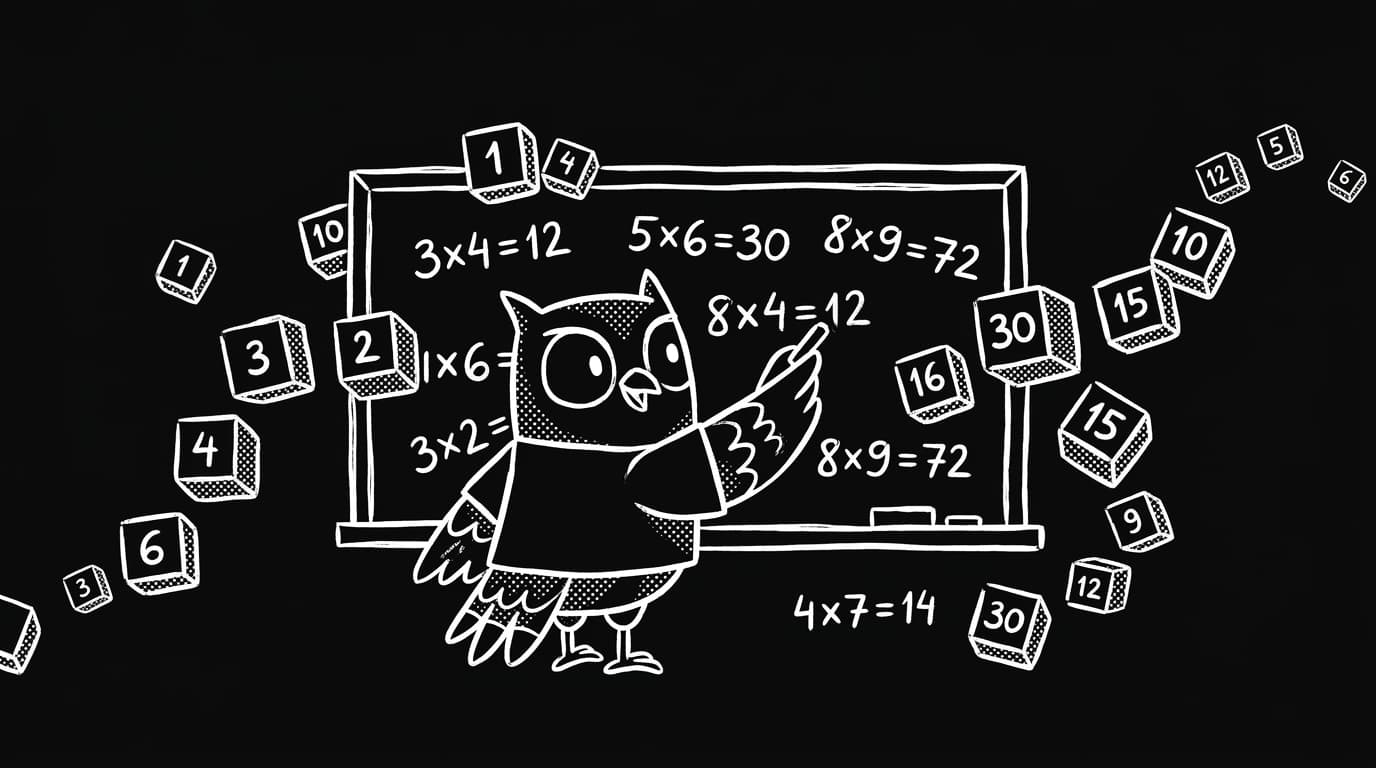
Most Mathness players know times tables to 12×12 and freeze the moment a board shows a 14 or 17 tile. Twenty eight products from 13×13 to 19×19 cover that gap. Memorizing them turns a five second factor hunt into a one second recall, which is the difference between a clean ranked climb and a stalled one. The 21 day drill below installs the block in three layers, with the six confusion products flagged from day one.
Why Stopping at 12×12 Hurts in Mathness
The standard times table ends at 12×12 = 144. Mathness targets often land in the hundreds, and tiles in the 13 to 19 range appear often enough that the 12×12 ceiling becomes a recurring bottleneck. A target of 252 factors into 14 × 18, both outside the standard table. A target of 234 factors into 13 × 18. A target of 288 factors into 16 × 18. Without those facts, you fall back to long multiplication, which costs three to five seconds per round. Across a 25 round ranked session that compounds to over a minute of lost time. That lost minute is more than the gap between most adjacent positions on the leaderboard.
The Twenty Eight Products to Memorize
The 13 through 19 block contains 28 unique products. Seven of them are squares: 169, 196, 225, 256, 289, 324, 361. The squares act as checkpoints for the products around them, because 14 × 15 = 210 sits exactly halfway between 196 and 225, and 17 × 18 = 306 sits between 289 and 324. Anchor on the squares first, then layer the cross products around each anchor.
- 13: 169, 182, 195, 208, 221, 234, 247
- 14: 196, 210, 224, 238, 252, 266
- 15: 225, 240, 255, 270, 285
- 16: 256, 272, 288, 304
- 17: 289, 306, 323
- 18: 324, 342
- 19: 361
Write the full set on a single sheet of paper once, grouped by first factor. Then rewrite the same products grouped by last digit. Last digit grouping speeds mid round recall, because a target ending in 4 narrows the candidate factor pair before you compute. Products ending in 4 in this block are 224, 234, and 304. Products ending in 6 are 196, 266, and 306. The recognition path runs target last digit, candidate set, single factor pair, commit.
The 21 Day Drill Schedule
Week one covers the seven squares from 13² to 19². Drill them in two minute blocks, three times a day, until you can recite all seven in under ten seconds without consulting the sheet. Week two adds the twenty one cross products, split into three groups of seven, one group per day for the first three days and then mixed recall for the remaining four. Drill each cross product in both directions: factor pair to product (14, 17 then 238) and product to factor pair (238 then 14, 17). Week three runs mixed recall across the full 28, with five random pulls per drill and three drills per day.
Stop the schedule when you hit 28 out of 28 with zero errors on a single sheet for two days running. Pair the daily drill with your existing morning warm up rather than treating it as a separate block. Five minutes inside the warm up is enough, and the products stay fresher when they sit next to live rounds. Skip days kill recall faster than any other variable in the schedule, so if a session gets dropped, restart the current week instead of resuming where you left off.
How to Use the Block Mid Round
When two tiles in the 13 to 19 range share a board, attempt direct recall before any decomposition. If the product lands inside a ten percent band of the target, commit and look for the closing operator. The reachability check still applies, because recall tells you the product but not whether the remaining tiles can close the gap. For products that miss the target by 5 to 15 points, pair the recalled product with a single add or subtract tile.
A board with 16, 17, 4, 9 and target 276 resolves in two moves: 16 × 17 = 272, then 272 + 4 = 276. A board with 14, 18, 6 and target 246 resolves with 14 × 18 = 252, then 252 minus 6 = 246. Both rounds finish under four seconds with recall, and over eight seconds without it. The recovered seconds compound across a 25 round session, which is the entire point of pushing the table past 12.
Confusion Pairs to Drill Early
Three pairs cause most of the recall errors in this block. 14 × 16 = 224 collides with 14 × 17 = 238 because the second factors sit next to each other. 15 × 17 = 255 collides with 15 × 18 = 270 for the same reason. 17 × 18 = 306 gets confused with 18 × 18 = 324 because both end in even digits and both sit near 300. Tag these six numbers on your drill sheet from day one and run them twice per session for the first ten days.
- 224 vs 238 (14×16 and 14×17)
- 255 vs 270 (15×17 and 15×18)
- 306 vs 324 (17×18 and 18×18)
Where the Block Sits in Your Drill Stack
The 13 to 19 block stacks on top of two digit multiplication shortcuts and fast squares from 11 to 99. Without those, the block carries you only on tiles inside the range. With them, almost any two digit pair in a Mathness round resolves through either direct recall or one shortcut step. Drop into the menu once you can clear the 28 products with zero errors and run a fresh round to confirm the recall is holding up under clock pressure.