Nerdle vs Mathness: Which Number Puzzle Trains Arithmetic Faster
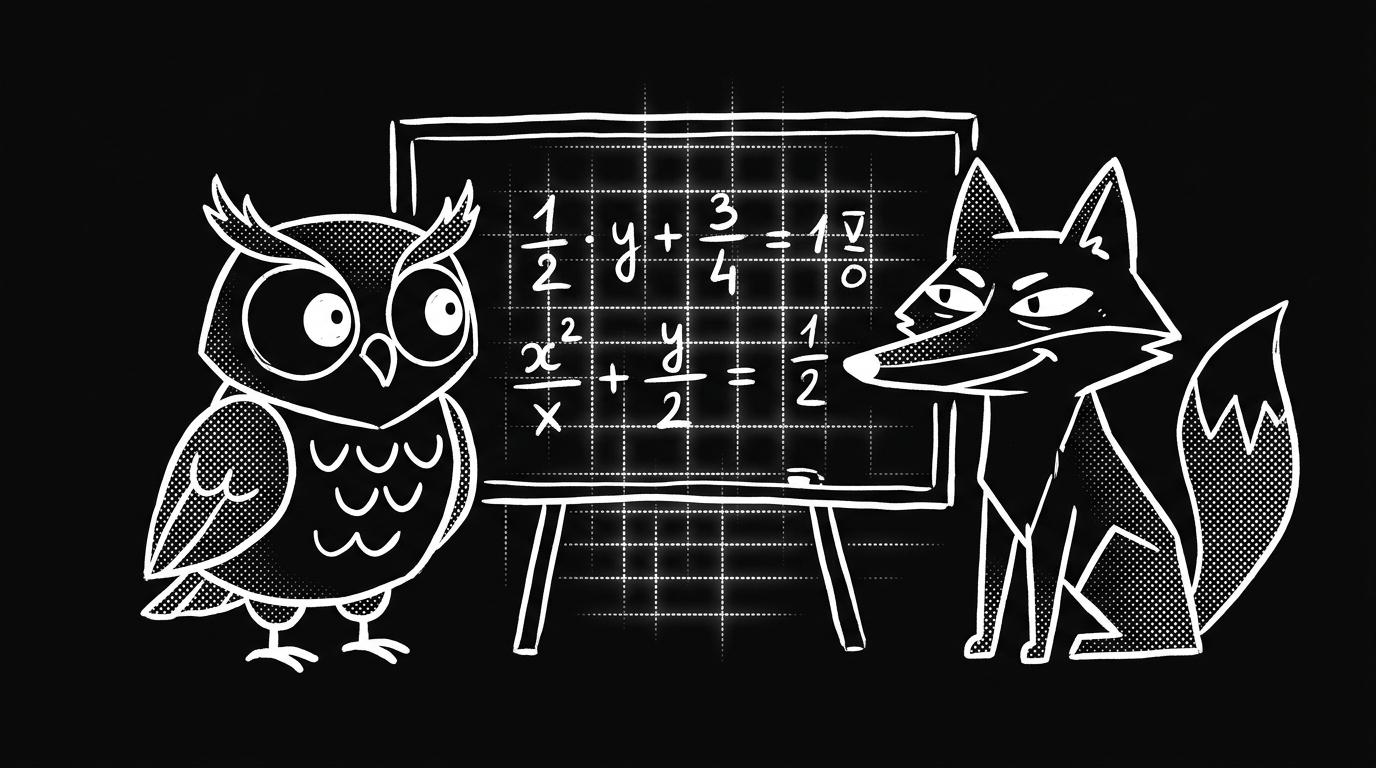
Nerdle gives you six guesses to reveal one hidden equation, and that is the whole game for the day. Mathness gives you a timed board of arithmetic targets with a scoring tier that penalises slow solves. Both wear the number-puzzle badge, but one rewards deduction under uniqueness constraints, and the other rewards execution speed under a clock. Picking between them for daily training is a question about which skill you want to build.
What Nerdle Tests
Nerdle shows an 8-tile row, and your job is to fit a valid equation using digits 0 to 9 and the operators +, -, *, /, =. Each guess returns colour feedback: green for correct position, purple for correct tile wrong position, black for absent. Six guesses, one answer per day, no timer. The core skill is constraint propagation, not arithmetic. A strong Nerdle player narrows the operator slot in guess two, then back-solves the digits by elimination.
The math itself is undemanding. Most Nerdle answers resolve to integer arithmetic within three-digit sums or products; the heavy lift is deciding which digits remain feasible after a round of feedback. That makes Nerdle closer to Wordle with equations than to a mental-math drill. If you track your own stats, the average solve lands between guess 4 and guess 5, and the time-to-solve for an experienced player is usually two to four minutes.
What Mathness Tests
Mathness sets a target number and a grid of operand tiles. You chain operations to reach the target before the timer expires, and faster solves score higher under a tiered scoring curve. There is no constraint feedback and no guessing: either your chain evaluates to the target or it does not. You can see how the scoring tiers and daily format work on the daily puzzle page and on the leaderboard where ranked solves get sorted by points, not raw time.
The arithmetic load is heavier by design. A typical board asks for 5 to 9 chained operations at a pace of roughly 1 operation per 1.5 seconds for a competitive score. That means addition, subtraction, multiplication, and division under a visible clock, with every wrong path costing points. This is the drill that builds raw arithmetic reflex, which is the same reflex that collapses first under exam pressure and real-world speed demands.
Direct Head to Head on Six Dimensions
The two games look similar from the marketing copy and diverge sharply when you time them. The list below breaks the comparison into the six dimensions that predict which one builds the skill you care about.
- Core mechanic. Nerdle: deduce hidden equation. Mathness: build an equation to hit a target.
- Time pressure. Nerdle: none, open-ended. Mathness: 60 to 120 second rounds with a scoring curve.
- Arithmetic depth per session. Nerdle: 3 to 6 small sums. Mathness: 15 to 40 chained operations.
- Daily volume. Nerdle: 1 puzzle, roughly 3 minutes. Mathness: multiple boards, roughly 10 to 20 minutes.
- Skill trained. Nerdle: constraint propagation, digit elimination. Mathness: mental arithmetic speed under load.
- Scoring. Nerdle: pass or fail by guess count. Mathness: tiered points, leaderboard, streaks.
Which One Trains Mental Arithmetic Faster
If the goal is mental arithmetic speed, Mathness builds it faster per minute of play. A single 90-second Mathness round forces 20 to 30 operations under a clock, which is more arithmetic volume than a full Nerdle solve. Repeat that four times a day and you have crossed 100 timed operations in under ten minutes. Nerdle in the same window gives you one puzzle and six guesses at most, with the bulk of mental effort spent on elimination rather than calculation.
Cognitive research on skill acquisition is consistent on this point: retrieval speed improves with high-frequency, low-friction practice under mild time pressure. That is the exact loop Mathness enforces, and it maps to the benchmarks parents use to judge progress, which we covered in grade-level mental math benchmarks. Nerdle does not hit this loop. It is a logic puzzle with arithmetic decoration, so progress plateaus once your deduction routine stabilises.
When Nerdle Is the Better Pick
Nerdle wins on two use cases. First, if you dislike timers and want a pure deduction puzzle in the Wordle family, Nerdle delivers a tight 3-minute daily routine with social sharing built in. Second, if you are training constraint-based reasoning for programming interviews or Sudoku-adjacent skills, Nerdle rehearses the same elimination muscle in miniature. A fuller comparison of target-number puzzles including Countdown and the 24 Game sits at 24 Game vs Countdown vs Mathness.
Nerdle also has the lighter commitment profile. One guess locks you in for the day; there is no leaderboard chase and no scoring tier to pursue. For players who want a daily puzzle without competitive friction, that is a feature, not a bug. The tradeoff is that Nerdle does not scale. Once you solve on guess 4 reliably, the game does not get harder.
How to Use Both Together
The two games stack cleanly in a single training day because they load different cognitive systems. Open Nerdle with coffee for a 3-minute logic warmup, then run two to three Mathness boards from the menu for the arithmetic reflex work. The logic warmup primes attention without burning working memory, and the arithmetic drill then lands on a focused brain. The whole routine fits inside 15 minutes and targets both deduction and speed on the same day.
Nerdle is a well-designed daily puzzle, and for logic-first players it earns its slot. Mathness is the better daily if you want measurable mental arithmetic gains, because the mechanic forces volume and the scoring forces speed. The honest verdict is not that one game beats the other across the board, but that they are not substitutes. Mental arithmetic needs timed, chained practice, and Nerdle does not provide it. Run them together or pick the one that matches the skill you want to build.