Number Sense: What It Is and Why It Beats Memorized Facts
A child who knows that 7 times 8 equals 56 has memorized one fact. A child who knows that 7 times 8 sits close to 7 times 10 and needs a subtraction of 14 has number sense. The second child can solve 7 times 9, 14 times 8, and 700 times 80 without new memorization. Number sense is the flexible layer underneath every arithmetic fact, and it is what separates students who compute from students who reason.
What Number Sense Means
Number sense is the ability to see quantity, relationship, and structure inside a number instead of treating it as a token. The National Council of Teachers of Mathematics defines it as an intuitive grasp of numbers and their relationships, built through purposeful practice. A student with number sense knows that 98 sits one step below 100, that 250 is a quarter of 1000, and that 48 splits into 6 times 8 or 4 times 12 depending on the target. The knowledge is compositional. Facts are the raw material, relationships are the tool. Children who build the tool early hit fewer walls in algebra, fractions, and word problems, because every new concept lands on top of an existing web of number relationships instead of an isolated fact table.
Where Memorized Facts Fall Apart
Rote memorization scales badly. The 12 by 12 grid contains 144 facts, and a strong student holds most of them. Add 13 by 13 through 25 by 25 and the count balloons to 625. Add three-digit multiplication and the memorization plan collapses. A student with only rote facts hits a wall at any problem outside the practiced grid. That wall shows up in high-stakes moments. Word problems asking for a 15 percent tip on 62 dollars ask a student to reason, not recall. Fractions ask a student to see 3 over 8 and 1 over 4 as neighbors, which is a relational skill, not a memorized identity. Standardized tests weight relational math heavily because it predicts later performance better than fact recall. Our breakdown of the research on mental math and cognition covers which skills transfer and which do not.
The Cognitive Science Behind It
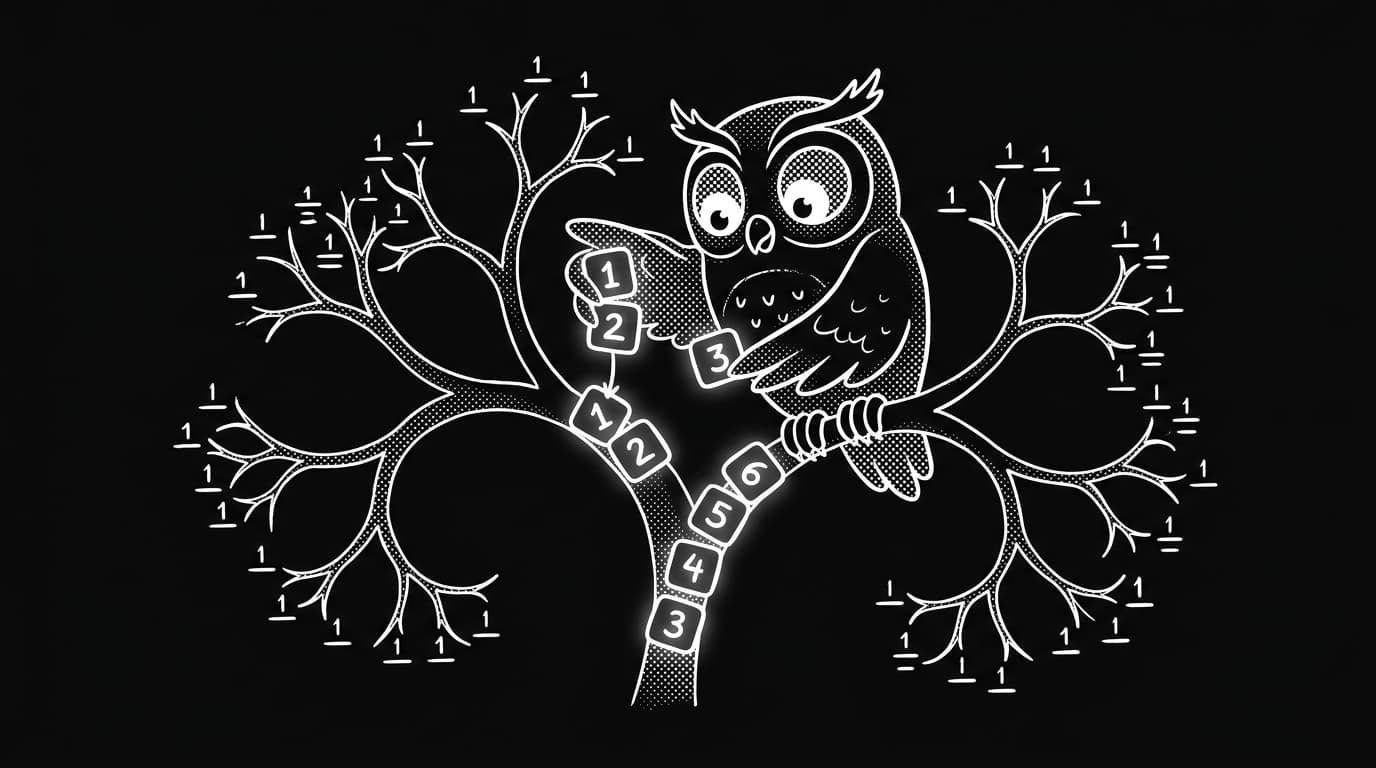
Working memory holds around four chunks at a time in a typical adult. A number sense player collapses 48 into one chunk labeled 6 times 8, half of 96, two less than 50, which frees the other three slots for the target and the operations. A rote learner holds 48 as one chunk with no cross-links, then runs out of slots when the problem grows. Cognitive load theory calls this schema formation. Every relationship a learner notices between two numbers lowers the mental cost of computing with either one later. This is why children who play with number relationships outside school often outperform children who only drill facts. Relationships consolidate during rest and become the first thing available during the next problem, which is the mechanism behind consistent improvement.
How to Build Number Sense
The moves that build number sense are small and daily. They rely on estimation, decomposition, and comparison rather than speed drills. Speed drills reinforce facts a learner already owns; they do not build new relationships. Estimation forces a learner to bracket an answer before computing, and that bracket is the reflex missing in most weak math students. Ten minutes a day of the following moves outperforms one hour a week of flashcards inside six weeks.
- Estimation warm-up: five items a day where the learner brackets an answer to the nearest ten before solving.
- Ten-friend chains: name a number, ask what pairs to 10, then to 100, then to 1000. Two minutes a day.
- Double and half: pick a two-digit number, double it, halve the result, repeat until it splits or resolves.
- Split the target: give a target like 84 and ask for three factor pairs and two additive splits.
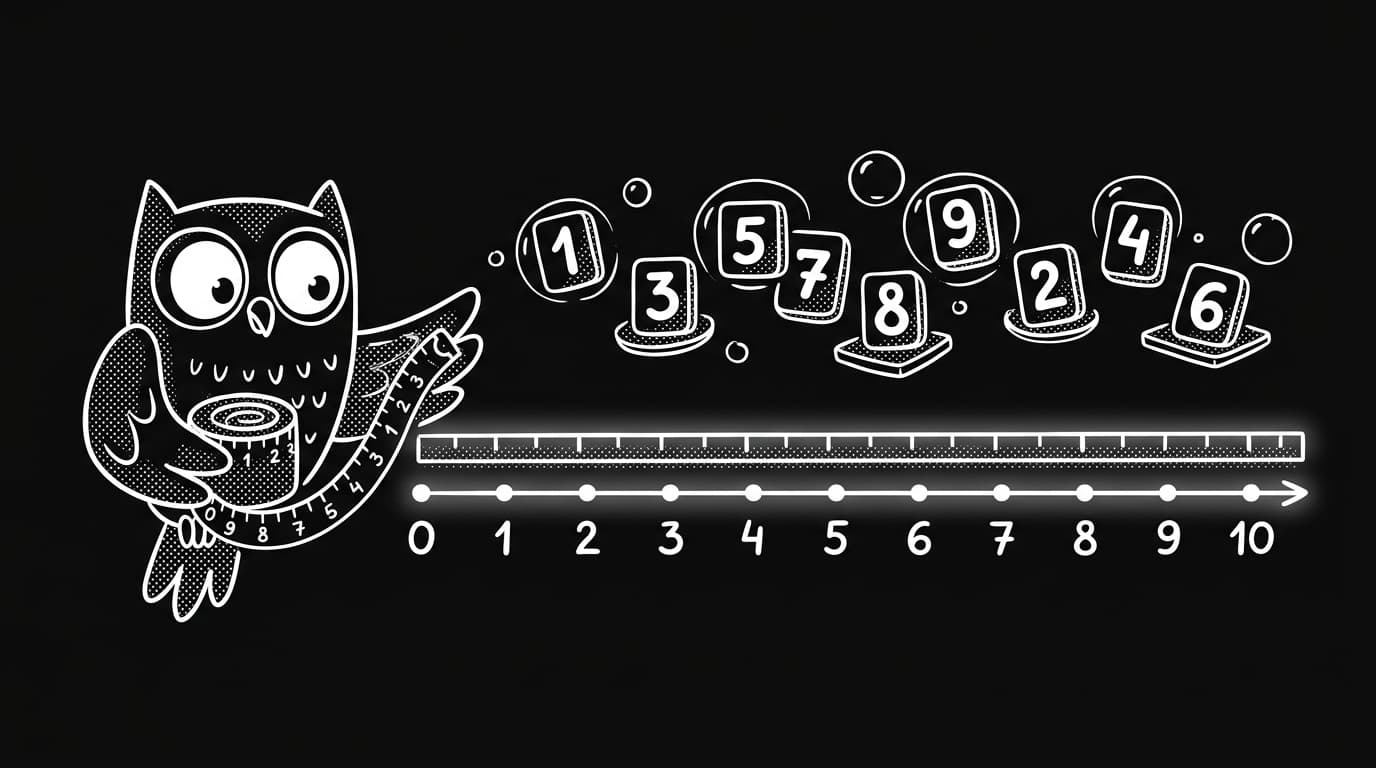
- Number lines: for any pair of numbers, place both on a mental line and describe the gap.
Target-number puzzles compress these moves under time pressure, which is where they consolidate. The Mathness daily puzzle drops one board of ten tiles and a target every twenty-four hours, and every board rewards decomposition over recall. The main game does the same over ranked rounds. Both formats train the relational habits above without a worksheet, and both produce the estimation reflex within about two weeks of daily play.
What Number Sense Looks Like in Practice
A learner with number sense answers what is 15 percent of 60 by seeing 10 percent as 6, then 5 percent as 3, then adding to 9. A rote learner reaches for a multiplier and often stalls. A learner with number sense answers which is larger, 3 over 8 or 5 over 12, by rewriting both over 24 and comparing 9 to 10. A rote learner searches memory and often guesses. The relational move runs faster and generalizes to any new denominator pair. Teachers watching for number sense track three signals: a student who explains an answer with reasoning rather than restatement, a student who catches an arithmetic slip before finishing, and a student who offers an alternative method when asked. These signals appear well before speed does, and they predict later math success more reliably than timed drills.
Games and Habits That Beat Flashcards
Games beat flashcards because they present novel boards, and novel boards force relational reasoning. Flashcards recycle the same hundred pairs and reward speed on that fixed set. A daily ten-minute session on a target-number puzzle builds more transfer than a daily hour of flashcards, and the research on interleaved practice supports this. Track progress on the leaderboard rather than by fact-recall time. Rank climbs when relational reasoning improves and stalls when only fact recall improves, which makes rank a cleaner signal of number sense than any timed quiz. For an adult rebuild plan that swaps drill for relational practice, our six-week mental math rebuild lays out a schedule that has moved rank for readers in their forties and fifties.