Decomposing the Target in Mathness: Factor First, Compute Last
Most Mathness players start with the tiles and try to reach the target. The faster method starts with the target and asks what shapes it can take. A target of 48 is 6 times 8, or 50 minus 2, or 12 times 4, or 60 minus 12. Each decomposition is a path. Picking the path before touching a tile saves the four seconds you would otherwise spend chasing three dead ends mid-round.
Why Backward Beats Forward
Forward play scans tiles and stacks operations until a result lands near the target. The path branches at every step, and most branches miss by 3 to 8. Backward play locks the destination first, then matches tiles to a known shape. The branching collapses because you are no longer searching, you are confirming. On a six-tile board with a target under 100, backward play finishes in 4 to 6 seconds. Forward play on the same board averages 9 to 12. The gap widens further on rounds where the target ends in 0, 5, or a familiar product. A round that rewards a 2-second finish over an 8-second one returns six full seconds to the next round, which compounds across a daily set of ten.
The Factor Tree Read
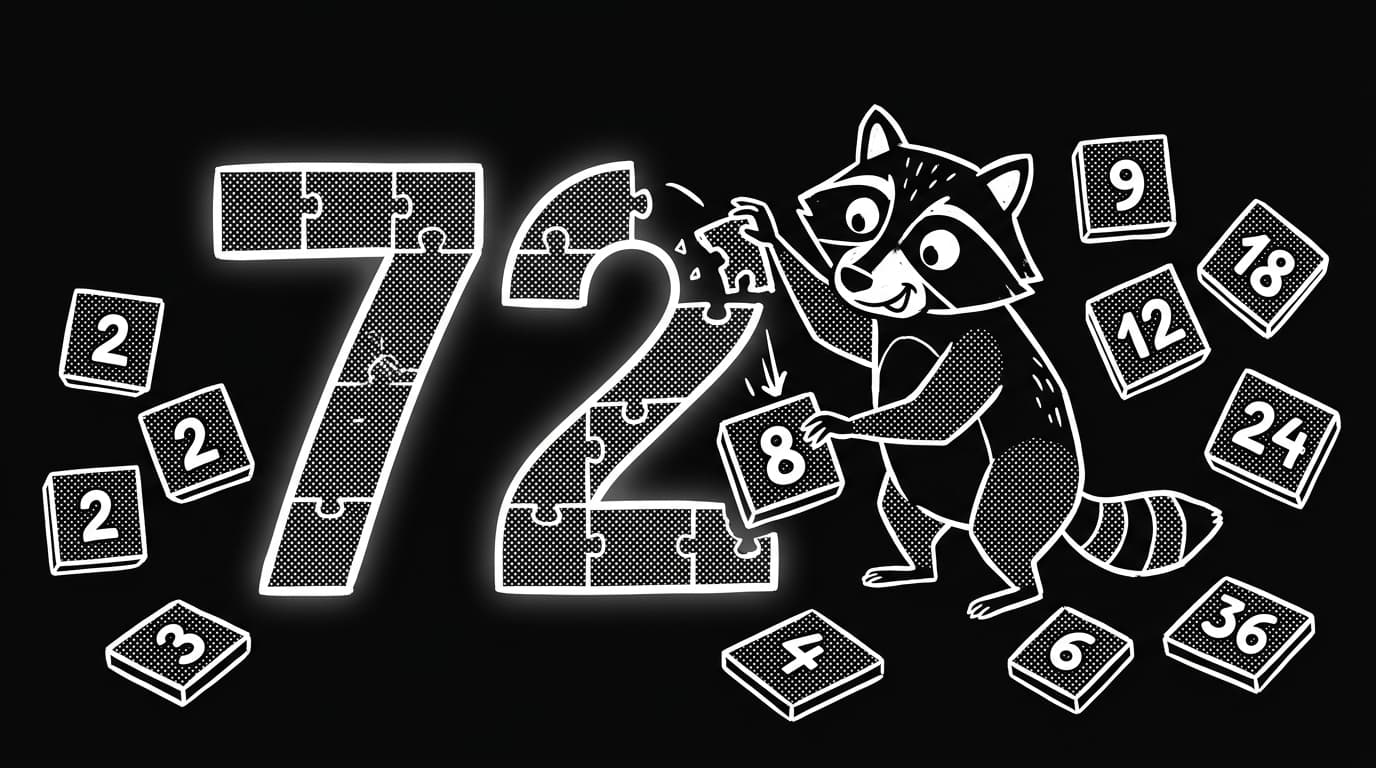
Every target carries a factor tree, and the first branch you should read is the one with two operands. A target of 72 splits cleanly into 8 times 9, 6 times 12, or 24 times 3. A target of 84 opens to 7 times 12, 6 times 14, or 4 times 21. A target of 96 opens to 8 times 12, 6 times 16, or 4 times 24. If your tiles include either operand, that round is a multiplication round. If not, drop to a three-operand shape such as 70 plus 2, 80 minus 8, or 60 plus 12. The factor tree of a two-digit number rarely carries more than five clean branches. You can scan all of them in under two seconds once you stop computing and start matching shapes.
Additive Splits for Stubborn Targets
Some targets resist multiplication. 47, 53, 61, 79, and most primes under 100 carry no clean factor pair from a typical Mathness tile set. For these, switch to additive splits the moment you spot a prime or a near-prime. 47 becomes 50 minus 3, 40 plus 7, or 25 plus 22. The trick is to anchor one side on a round multiple of 5 or 10, then close the gap with a single tile or a single subtraction. Players who treat primes the same as composites lose 3 to 5 seconds per prime round before they pivot. Tag the target as prime in the first second, then commit to additive play. A useful shortcut: any odd target ending in 1, 3, 7, or 9 that fails a quick divide-by-3 and divide-by-7 check is almost always a prime or a stubborn semi-prime, and additive shapes will resolve it faster than another factor pass.
- Two-operand product: a times b, where both operands sit on the board
- Round-minus-small: 50 minus 3, 100 minus 12, 200 minus 18
- Round-plus-small: 30 plus 4, 80 plus 7, 150 plus 6
- Three-operand chain: a times b plus c, or a times b minus c
- Difference of products: a times b minus c times d
When the Tiles Refuse the Shape
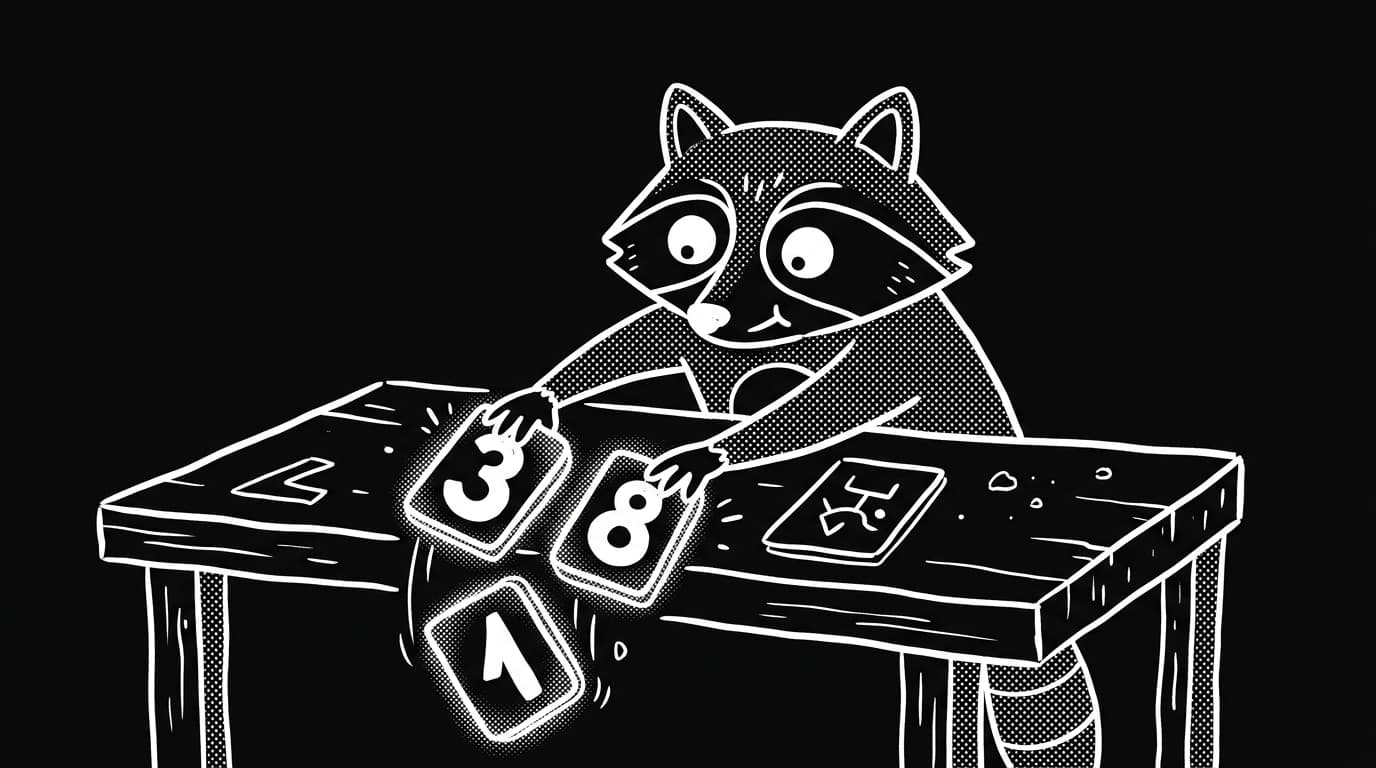
The hardest backward round is the one where you see the shape but the tiles refuse to fit. Target 64, you see 8 times 8, but the board has one 8 and no second 8. The fix is to factor one of the missing operands. 8 becomes 4 times 2, or 2 plus 6, or 10 minus 2. Now the shape becomes 4 times 2 times 8, which uses three tiles instead of two but still lands. The same move rescues 81 when you have one 9 and no second 9: rebuild the missing 9 as 3 times 3, or 10 minus 1, or 4 plus 5. Players who freeze on the first failed shape spend the rest of the round in forward mode and miss the target. Players who refactor on the fly finish two seconds late and still land. The pattern recognition you already use for tile reading applies to factor reading too.
The Three-Round Drill
Decomposition is a habit, not a calculation. The drill that locks it in takes three rounds of daily play. Round one, write down three decompositions of the target before you touch a tile. Round two, write down two. Round three, write down one. By round four, the decomposition happens silently in the first second. Budget two seconds for the target read, three to four seconds to confirm the shape against the tiles, and the remainder for the keystrokes. Run the drill once per session for a week and the habit holds for the next month. Skip a session and the forward-scan reflex creeps back within four days. The cost of the drill is roughly 90 seconds per session, and the payback shows on day three when your average round time drops by 2 seconds.
How Decomposition Pairs With Other Tactics
Backward play stacks cleanly with anchor numbers because the round-plus-small and round-minus-small shapes both close on an anchor. It also pairs with the two-pass method because the first pass becomes a factor-tree read instead of a tile scan. Players who run decomposition without anchors finish rounds 1 to 2 seconds slower because they recompute the round multiples each time. Players who run anchors without decomposition lose the prime rounds entirely. The combination is what moves a leaderboard climb from the 500 to 100 band into the top 50. Pick a daily target and read the number before you read the tiles.