Test Publish: The Two-Pass Method for Mathness Rounds
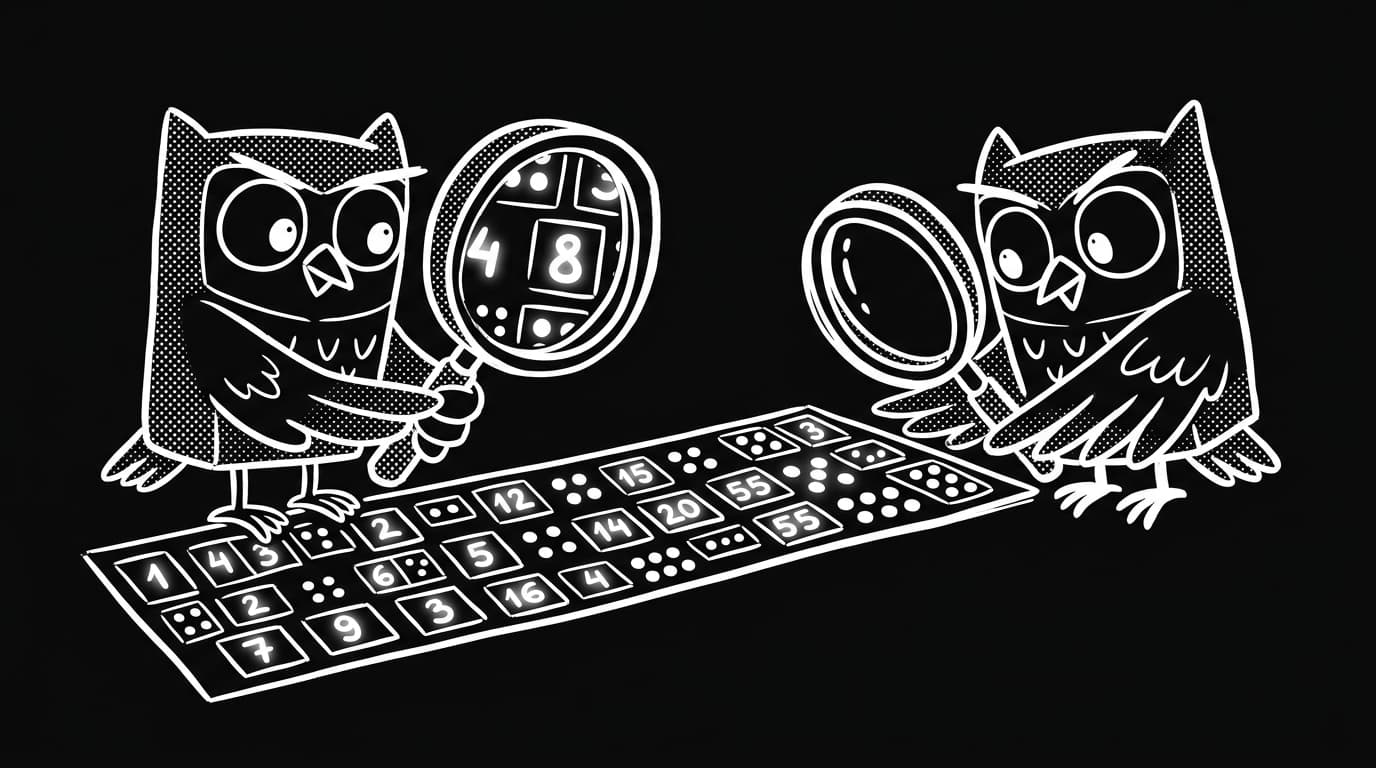
Most players treat a Mathness round as one long stare at the board until something clicks. That is the slowest way to play. The two-pass method splits the round into two short, separate jobs: one for the cheap points, one for the target line. Done right, it shaves three to five seconds off your average round and almost never leaves you stuck on the clock.
What the two-pass method is
The two-pass method is a deliberate split of attention. Pass one is fast and visual: you look only for pairs and triples that are obviously friendly, the kind that add to ten, double cleanly, or share a factor. You do not try to reach the target yet. You bank the points you can see in under three seconds. Pass two is slower and arithmetic: now you look at what is left on the board and work toward the target line with the tiles you have not spent.
The split matters because the two jobs use different mental muscles. Spotting friendly pairs is pattern work. Hitting a specific target is computation. When you try to do both at once, you compute when you should be scanning, and you scan when you should be computing. The two-pass method forces you to pick one mode at a time, and that is where the time savings come from. If you have not internalised the board-reading half of this, the pattern recognition guide is the prerequisite.
Pass one: cheap wins, no target thinking
On pass one, your only job is to find and bank arithmetic that is too easy to refuse. Two tiles that add to ten. A tile that is exactly double another. A three-tile chain where the first two cancel into something you can multiply on autopilot. You are not asking whether these moves help you reach the target. You are asking whether they cost you almost no thinking time, and whether they leave the board cleaner.
This is the part beginners skip. They look at the board, see no obvious path to the target, and freeze. Pass one says: do not look for a path yet. Take the obvious points first, even if they seem unrelated to where you want to end up. A cleaner board is easier to solve, and the points you bank in pass one are points your opponent now has to chase. The mental math tricks post covers the specific pair patterns that should jump out at you in under a second.
- Pairs that add to ten, twenty, or fifty
- One tile that is exactly double or half another
- Three-tile chains where two cancel into a friendly number
- Any tile that is a clean multiple of the round modifier
Pass two: solve toward the target line
Now you have a smaller board and fewer distractions. Pass two is where the real computation happens. You look at the tiles that survived pass one and ask the standard targeting question: which combination of these gets me closest to the target without going over, and which gets me exactly there. This is the work the target-miss guide trains you to do without flinching when the numbers do not divide cleanly.
The trick on pass two is to commit. You picked the tiles in pass one because they were cheap. You did not pick them because they were on the way to the target. So in pass two you will sometimes have to give up a tile you would have liked, or take a longer route to the target than you would have with a fresh board. That is fine. You already banked points pass-one players did not. You are allowed to be a little less efficient in pass two and still come out ahead on the round.
When to skip pass one entirely
There are rounds where the target is so close to a single tile that the right move is to ignore pass one and shoot straight at it. If you see a tile that is one off the target and another tile that adds the missing one, you do not need to scan for friendly pairs. You need to lock the answer and move on. The two-pass method is a default, not a law. Skip it when the board hands you a one-move win on first sight.
The same applies when the round modifier punishes long chains. If a round penalises every operation past the third, pass one will cost you more than it banks. In those rounds, collapse to a single pass and aim straight at the target. The Mathness rules and scoring overview is worth re-reading once a week if you have started seeing round modifiers you do not remember the rules for.
Drilling it until it becomes automatic
The two-pass method is a habit, not a trick. The first ten rounds you try it, it will feel slower than your old approach, because you are consciously switching modes mid-round. After about thirty rounds it stops feeling like two passes and starts feeling like one slightly more organised pass. That is when the time savings show up. Set yourself a block of twenty rounds where you only practice this, and accept that your accuracy may dip for the first half of the block.
If you want a structured way to drill it, the leaderboard drills post has a daily routine you can drop the two-pass method into without changing your time budget. The routine already includes a scanning block and a targeting block, which map cleanly onto the two passes.