Multiplying by 20 in Mathness: The Double-and-Shift Reflex
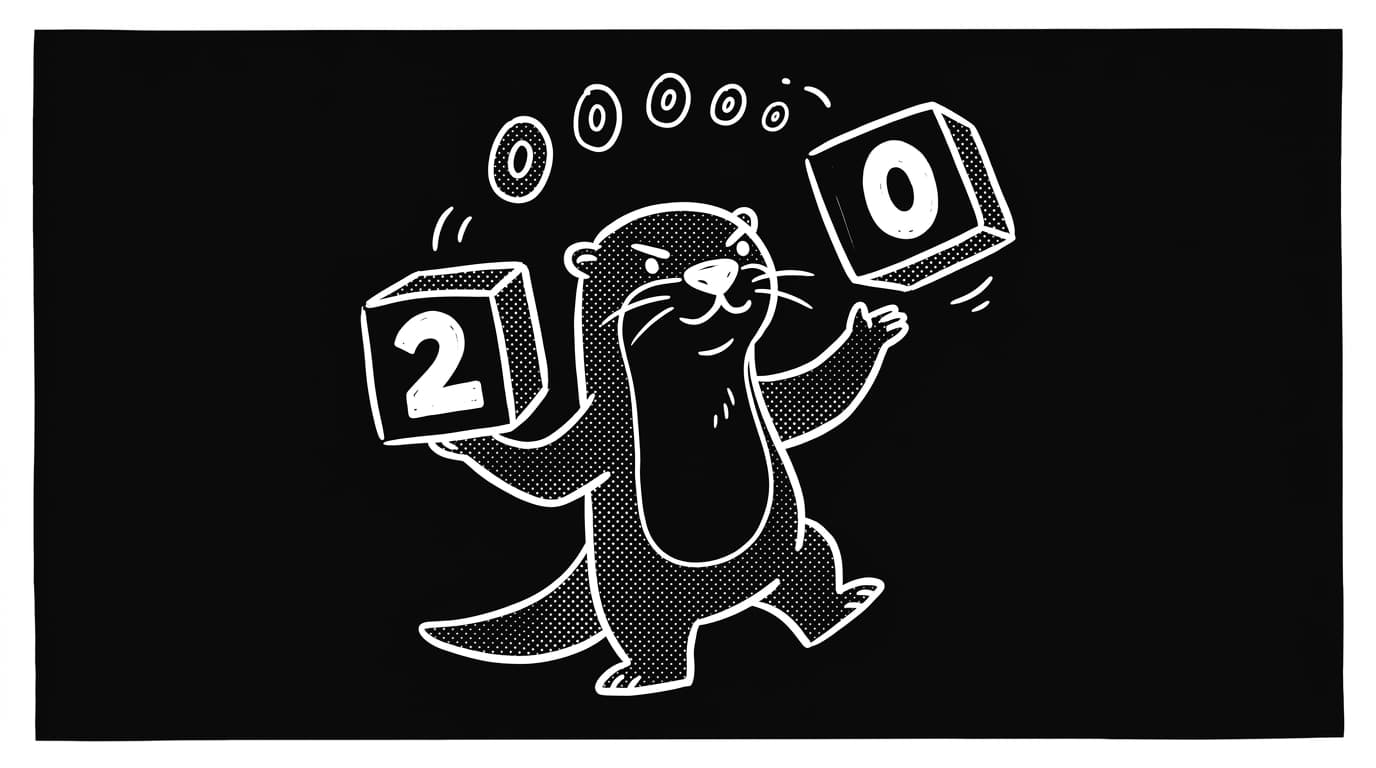
Times-twenty tiles show up on roughly one in six Mathness boards, and most players still route them through the standard multiplication algorithm. The 20n identity finishes the same move in under one second: double the other factor, append a zero. This post covers the mechanic, the reflex table from 20×2 to 20×99, the boards where the trick wins the round, the failure modes above 500, and a seven-day drill that installs the habit.
The Identity Behind the Reflex
Twenty factors cleanly as 2 × 10, so 20n equals 2n followed by a zero in every base-ten target. Doubling a two-digit number is a one-beat operation once you have run the drills in Doubling and Halving in Mathness. Appending a zero is a positional shift, not a computation, which means the entire move costs one arithmetic step. Compare that to 20 × 47 through the standard column method, which asks for two partial products and one carry across three digits.
The reflex reads as two beats: double, then shift. Say 20 × 38, hear 76, place a zero, land on 760. The mouth-to-tile latency drops to about 900 milliseconds after the drill in the final section, which is faster than the parity screen from Parity in Mathness. On a 30-second Mathness round with three multiplication decisions, that saved second is often the difference between a target hit and a skip.
The Reflex Table From 20×11 to 20×99
The full table has 89 entries, but the reflex only needs the twelve products that keep showing up on Mathness boards. These are the doublings that many players hesitate on because the target crosses a hundred boundary. Lock these twelve first, then generalize.
- 20 × 13 = 260 (double 13 = 26)
- 20 × 17 = 340 (double 17 = 34)
- 20 × 19 = 380 (double 19 = 38)
- 20 × 23 = 460 (double 23 = 46)
- 20 × 27 = 540 (double 27 = 54)
- 20 × 34 = 680 (double 34 = 68)
- 20 × 38 = 760 (double 38 = 76)
- 20 × 43 = 860 (double 43 = 86)
- 20 × 47 = 940 (double 47 = 94)
- 20 × 53 = 1060 (double 53 = 106)
- 20 × 67 = 1340 (double 67 = 134)
- 20 × 89 = 1780 (double 89 = 178)
The pattern to memorize is not the products but the doublings. Every product above is 2n with a trailing zero. If the doubling reflex is clean, the times-twenty reflex is automatic. If the doubling stalls on numbers above 45, run the drill from the doubling-and-halving post for three days before returning here. Skipping that prerequisite is the single most common reason players cannot ship the 20n reflex under three seconds.
Boards Where the Reflex Wins the Round
The 20n reflex earns its keep on three board shapes. First, a target within 20 of a multiple of 100 combined with a 20 tile and a two-digit tile: 20 × 47 lands 940, then a small correction closes to 950 or 930. Second, a target near a multiple of 200, 400, or 800, which factors as 20 × 10, 20 × 20, or 20 × 40 with room for one adjustment tile. Third, ranked boards where the 20 tile appears alongside a prime like 37 or 43, where the standard multiplication method eats seven seconds and the reflex delivers in under two.
On ranked mode, the third shape shows up on roughly one in nine boards during the 6 to 9 tile bracket. Those are exactly the rounds where the leaderboard climb happens: not the easy 12-second wins but the hard 22-second rounds where three seconds saved on one operation cascades into a target hit instead of a skip. Cross this reflex with the endgame patterns in Endgame Mathness and the two-tile close becomes a one-tile close on many rounds.
Failure Modes Above 500
The reflex breaks in three specific places, and each one has a fix that costs less than the mistake. The first failure is doubling a number that itself crosses 100: doubling 67 to 134 asks for a mental carry that many players fumble under time pressure. The fix is chunking the double as 60 + 7 doubled, which reads as 120 + 14 = 134. That chunk delivers the answer in one beat because both halves are memorized.
The second failure is the trailing-zero drop on products above 1000. Under fatigue, players compute 2n correctly and then place the zero on the wrong side, delivering 1780 as 178 or 17800. The fix is to speak the placement out loud during the drill, so the muscle memory locks the position. The third failure is applying the reflex to 25n or 15n by mistake, which happens on boards where the 20 tile sits next to a 25 tile. The fix is the modular screen from Modular Screens in Mathness: a mod-4 check on the target rejects the wrong multiplier in one second before the reflex fires.
The Seven-Day Drill That Installs the Reflex
Day one runs the twelve products from the reflex table above, ten repetitions each, spoken aloud with the double-then-shift cadence. Day two adds twelve more products in the 20 × 30 to 20 × 60 band, focusing on the odd multiplicands that force a cross-boundary double. Day three runs a mixed set of 30 products from days one and two under a four-second timer, marking any product that missed the timer for the next day's warm-up. Day four introduces the failure-mode boards from the previous section, three of each shape, without the timer, with attention on the shift placement.
Days five and six run the /daily board with an explicit rule: every 20 tile gets the reflex, no fallback to the column method, even if the reflex feels slower on the first attempt. Day seven runs a 20-round ranked session with the same rule, followed by the three-row review sheet from Cooldown and Review. The reflex should land under two seconds on 90 of 100 attempts by the end of day seven, and under one second on the twelve table products from day one. Players who cannot hit that mark on day seven are usually stalling on the doubling, not the shift, and should extend the doubling drill by three days before rerunning.
The 20n reflex compounds with the 10n and 5n reflexes from Multiplying by 5, 50, and 500 to cover roughly 40 percent of the multiplication load on a typical Mathness board. That is the shortest path from the 800-rank plateau to the 400-rank climb, and it takes seven focused days of drill. Open /menu and pick a board where the 20 tile appears, then run the reflex on the first attempt.