Bidirectional Search in Mathness: Work From Tiles and Target Together

Most Mathness players search from one end. They start with the six tiles and combine forward, or they factor the target and work backward. Bidirectional search runs both at once, and the two paths meet in the middle two to three seconds faster. The method takes one week to install and pays off on roughly 40 percent of three-digit targets.
What Bidirectional Search Means on a Mathness Board
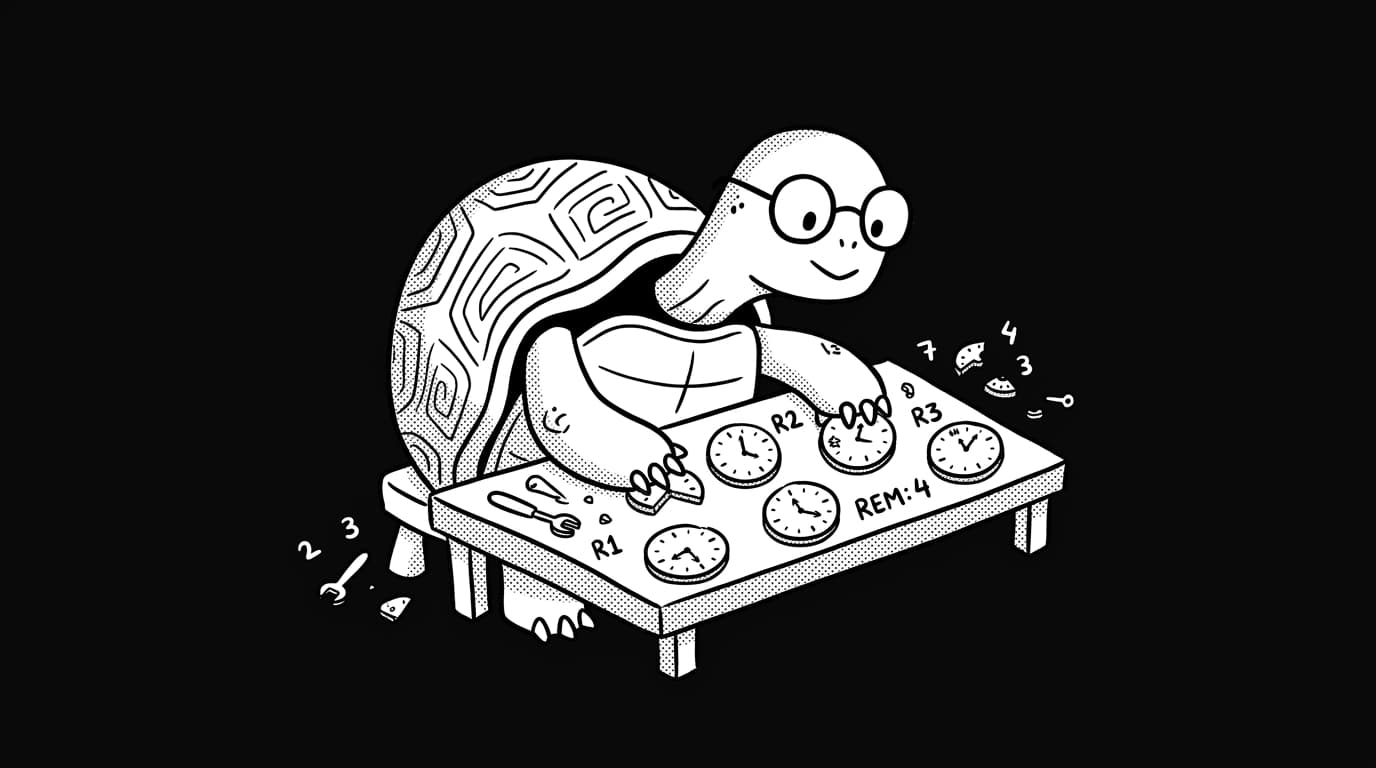
Forward search reads the six tiles and asks what they can build. Backward search reads the target and asks what factors or sums land on it. Bidirectional search does both in parallel. You hold a short list of tile products on the left side of working memory and a short list of target factors on the right, then scan for a match. The match is the bridge, the move that connects the two halves. On targets like 588 or 672, the bridge usually surfaces within four seconds. Single-direction search on the same boards takes seven to ten.
The Three-Second Setup: Two Lists in Your Head
Before you compute anything, build two short lists. The left list holds two or three obvious tile products: any pair that multiplies cleanly, like 25 × 4 = 100 or 7 × 8 = 56. The right list holds two or three obvious target factors: 588 = 4 × 147 = 12 × 49 = 84 × 7. Your working memory has room for about six numbers at peak, so cap each list at three entries. Read the three-slot scratchpad method if holding two lists feels heavy in the first week.
Where the Two Searches Meet
The meeting point is a number that appears on both lists, or a number on one list that the other list can reach with one tile. If your left list has 49 from 7 × 7 and your right list has 49 as a factor of 588, the bridge is 49 × 12. Now you need 12 from the remaining tiles, and that is often a one-operation finish. The skill is recognizing the bridge fast, not computing it. Spotting an exact match across two lists of three takes about 400 milliseconds with practice.
Sometimes the bridge is one step off. Your left list shows 100 and the target factor list shows 98. Two short of 98, so you adjust with a minus 2 from any small tile. Adjusting through small tiles is faster than rebuilding the product line from scratch, and it keeps both halves of the search alive while you correct.
Boards Where Bidirectional Wins by Five Seconds
- Three-digit targets with two or more medium factors in the 12 to 49 range
- Tile sets containing both a small prime and a round number like 25, 50, or 100
- Targets ending in 0, where one half chases a round number and the other handles the remainder
- Boards with at least one tile pair that products to a recognizable square: 49, 64, 81, or 100
- Targets between 250 and 800 with no obvious single anchor, where you need two paths to triangulate
On those five board shapes, bidirectional search beats target-only decomposition by three to five seconds. On simple two-digit targets, single-direction is faster because the search space stays small. Use the method when the target sits above 100 and at least one tile is awkward, like a 7 with no clean partner or a lone 75 with five small numbers around it.
Common Mistakes That Stall the Method
The first mistake is letting either list grow past three entries. Four products on the left means you have no room to hold the target factors on the right. The second mistake is computing both lists from scratch every round. Reuse anchor pairs you already own: 25 × 4, 50 × 2, 12 × 12, 7 × 8. The third mistake is forcing the bridge. If the lists do not meet in four seconds, fall back to forward search from the strongest tile pair and finish inside your round-time budget.
A fourth mistake is verbalizing both lists. Subvocalizing six numbers eats one full second per round. Visualize the digits instead, or place them on imagined positions: left list at ten o'clock, right list at two o'clock. The spatial split frees the verbal loop for the bridge check itself, which is the only step that benefits from inner speech.
The Seven-Day Drill
Day one, run ten boards on /daily and practice only the setup: write the left list, write the right list, do not solve. The goal is a three-second build, not a finished round. Day two, add the bridge check: scan for a match, mark it, then solve. Day three, drop the writing and hold both lists in your head. By day four, your time to first bridge should sit under four seconds on three-digit targets.
Days five through seven, play ranked boards and track how often the bridge appears in the first four seconds. Aim for 60 percent on three-digit targets by day seven. Cross-check the climb on your leaderboard and log misses in your post-session review. The full mode list lives at /menu if you want to mix in puzzle modes that train target-factor recognition without the round clock.
By the end of week one, expected gains are measurable. Players who run the drill in order typically shave 1.5 to 2 seconds off three-digit rounds, lift accuracy on targets above 200 by 8 to 12 percentage points, and skip fewer rounds in the final third of a session. Track those three numbers in your review sheet so the method either earns its slot in your routine or gets dropped after week two with no sunk-cost drag.