Working Memory in Mathness: Hold Three Numbers Without Losing the Target

Most Mathness rounds are not lost to bad arithmetic. They are lost to a forgotten target, a dropped partial result, or a tile that vanished from mind two seconds after it was picked. Working memory holds about four chunks at once under timer pressure, and a Mathness round routinely demands the target, two partial results, the remaining tiles, and the next operator. That is five to seven items competing for four slots. The fix is not more raw memory, it is a scratchpad discipline that compresses the load so the round survives the clock.
The Four-Slot Limit Under Timer Pressure
Cognitive research puts working memory at roughly four chunks during focused attention, and that capacity drops by about one slot when a countdown timer is visible. A Mathness round with a 30-second clock therefore runs on three usable slots, not four. The target eats one slot for the entire round. The current partial result eats a second. The remaining tile list and the next operator share the third. Anything beyond that gets dropped, which is why players type a correct subtotal then forget what they were subtracting from.
The three-slot model also explains why two-step plans work and four-step plans fail. A plan like 25 times 4, then minus 7 fits three slots: target, intermediate 100, and the minus-7 finish. A plan like 25 times 4, plus 13, divided by 3, minus 2 asks the brain to carry four moving values past the halfway mark, and the target almost always falls out first. Cap plans at three operations until the scratchpad habit is automatic, then extend.
The Three-Slot Scratchpad
Assign each slot a fixed job before the round starts and never swap them mid-round. Slot one is the target and only the target, repeated silently every time a partial result lands. Slot two is the current running total, overwritten the instant a new operation finishes. Slot three is the next move, a single operator paired with a single tile, held only until it executes. This fixed-role system stops the most common Mathness failure, which is letting a fresh partial result push the target out of the active set.
Rehearsing the target between operations is the single highest-payoff habit. After every tap, say the target number once, internally or under the breath. The rehearsal cost is roughly 200 milliseconds, which is cheap compared to the four to six seconds lost to a target-recall error mid-round. The pattern recognition post covers the board scan that feeds slot three before the timer starts, and the two systems stack cleanly.
Chunking to Cut the Load
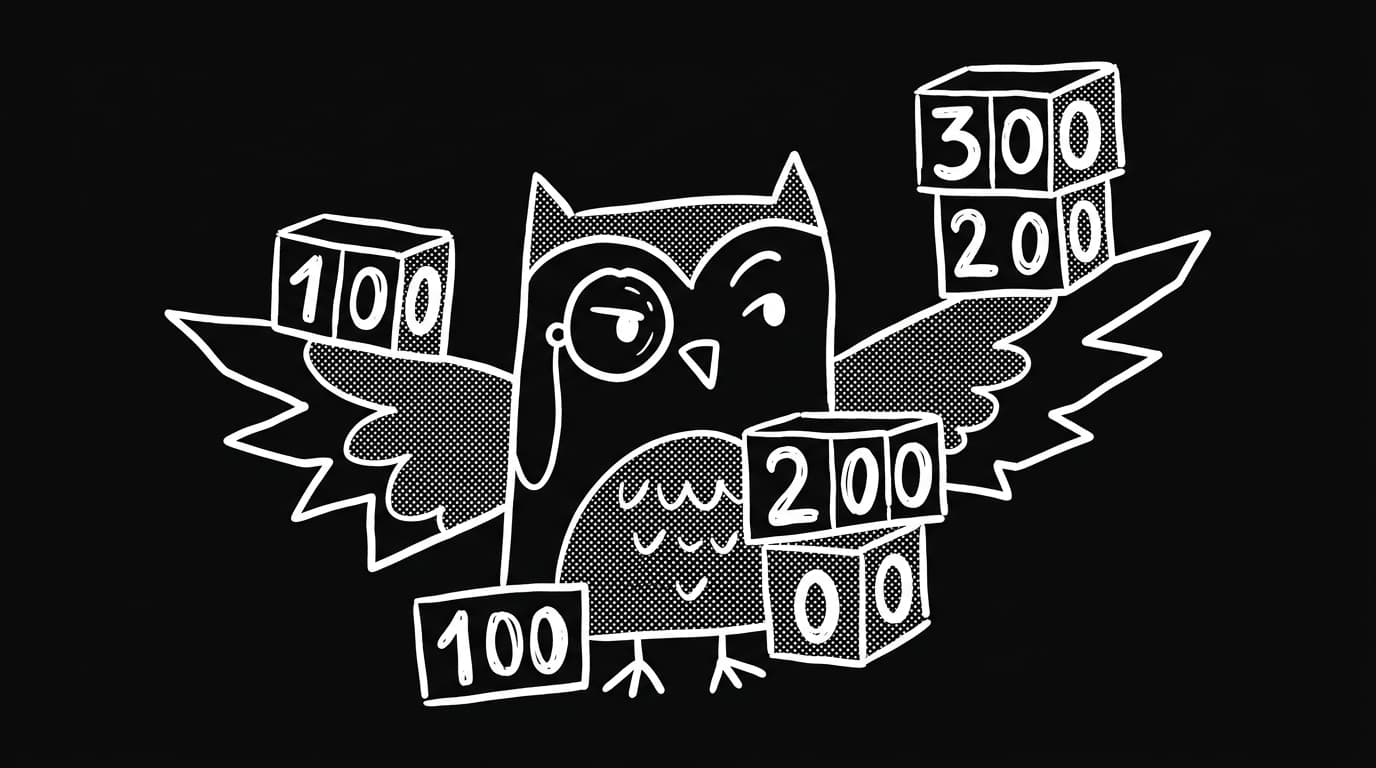
Chunking compresses two numbers into one slot by binding them to a familiar shape. The pair 25 and 4 is one chunk because every player knows it makes 100. The pair 7 and 8 is one chunk because the product 56 is a memorized fact. Treating these pairs as single units frees a working memory slot for the target and the next operator. The squaring drills covered in fast squares from 11 to 99 build this exact chunking reflex for second-power tiles.
Number bonds chunk the addition side the same way. Pairs that sum to 10, 100, or 1,000 collapse into a single 10-shaped or 100-shaped unit, which is why the number bonds drill frees so much slot space. A round that uses three pre-chunked pairs leaves the working memory budget intact for the final operator decision, the place where most close rounds are decided.
Common Memory Leaks and the Fix for Each
The four most expensive working memory leaks in Mathness all have a fixed countermeasure. Each one is cheap to install and pays back within a single ranked session.
- Target drift: the partial result overwrites the target. Fix: rehearse the target silently after every operation, no exceptions.
- Tile loss: a used tile is reused by accident, breaking the round. Fix: mentally cross off a tile the instant it taps, treating the crossed list as a four-item pattern not a count.
- Operator slip: the planned minus becomes a plus under pressure. Fix: pair the operator with the tile in one chunk before tapping, so they execute as a single unit.
- Plan length overflow: a four-operation plan loses its tail. Fix: cap plans at three operations until the round is at least 70 percent solved, then re-plan the finish.
The Five-Day Drill
Working memory cannot be expanded much, but the discipline that protects it can be locked in five days. Each day takes about eight minutes and targets one failure mode. The drill assumes a baseline familiarity with the rules covered in how to play Mathness, so start there if the four-front scoring is still new.
- Day 1, target rehearsal: play 10 daily rounds, saying the target out loud after every tap. Accuracy should rise about 15 percent over a cold baseline.
- Day 2, three-operation cap: play 10 rounds where every plan is capped at three operations, even if a four-step plan looks shorter. Note completion time per round.
- Day 3, chunk audit: after each round, list which pairs were pre-chunked. Aim for at least two chunks per round by session end.
- Day 4, operator pairing: tap each operator and tile as one mental unit. Count the number of operator slips and target a sub-1 average per 10 rounds.
- Day 5, mixed: play 15 rounds applying all four habits at once. Compare accuracy and average round time to the day 1 baseline.
Where the Scratchpad Pays Off Most
The scratchpad habit pays the highest dividend in two places: the middle of a round, between operations three and five, and the final tap on a tight clock. The middle is where target drift causes the most silent damage, because a player who has lost the target keeps solving toward the wrong number for two or three operations before noticing. The clock management post frames the middle window as the highest-error zone, and the scratchpad is the single biggest fix inside it.
On the final tap, the scratchpad turns close calls into clean finishes. With one tile, one operator, and a clear target in slot one, the finish is a single chunk that fires in under a second. Without the scratchpad, the same finish becomes a frantic re-check of what the target was, what the running total is, and which tiles remain, which routinely burns four seconds and costs the round. Take the habits into ranked once the five-day drill closes, and treat any session where the target was ever forgotten as a signal to repeat day 1.