Division in Mathness: When to Divide First and the Shortcuts
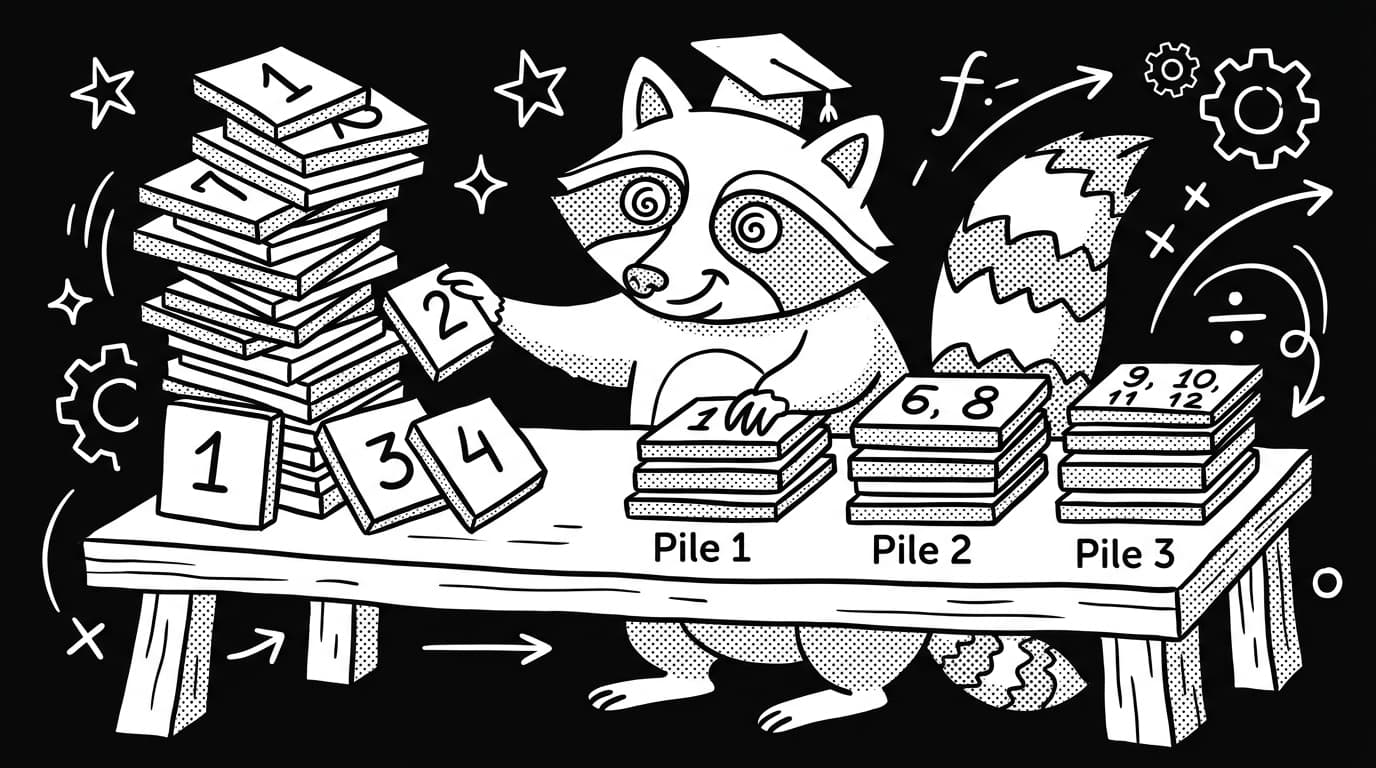
Division is the most-skipped opening move in Mathness. Players reach for multiplication and addition first, then burn seconds when the target sits below the largest tile on the board. The fix is a two-second divisibility scan and a short fixed list of safe divisors. This post covers when division belongs as the first operation, the six divisibility tests worth memorizing, the two-operation finish that follows a clean cut, and the seven-day drill that installs the reflex.
When Division Beats Every Other Opening
A target that lands between 1 and 25 with a large tile on the board signals a division opening. The 75 tile divides cleanly by 3, 5, 15, and 25, which covers a wide span of small targets. The 100 tile divides by 2, 4, 5, 10, 20, 25, and 50, so almost any small even target is one cut away. The 50 tile splits into 25, 10, 5, and 2. Skipping the division scan costs three to five seconds when you circle back to it after a failed multiplication path. The cleaner rule: if the target is at most one quarter of the largest tile on the board, run the divisibility test first. Pair this scan with the target decomposition habit so you read both directions on the same pass.
The Six Divisibility Tests Worth Memorizing
Mental math books list a dozen divisibility rules. Only six matter inside Mathness, because the tile pool tops out near 100 and small primes dominate the playable patterns.
- Divisible by 2: last digit is even (0, 2, 4, 6, 8).
- Divisible by 3: digit sum is divisible by 3 (87 splits to 8+7=15, which passes).
- Divisible by 4: last two digits form a number divisible by 4 (124 ends in 24, which passes).
- Divisible by 6: passes both the 2 test and the 3 test.
- Divisible by 8: last three digits divide by 8 (rarely fires inside Mathness, useful on big tile sums).
- Divisible by 9: digit sum is divisible by 9 (immediate flag for the 9 tile and the 3-tile compound).
The 3 test and the 9 test are the highest-value pair. Both run in under a second once trained, and they trigger the most common division openings on boards with 6, 9, 75, and 12 tiles in play. The 4 test ranks third because the 4 tile pairs cleanly with the 25 tile to hit 100, and with the 8 tile to hit 32. The 8 test is the lowest yield of the six. Promote it only after the other five feel automatic.
Reading the Board for a Division First Move
Three board signals point to a division opener. First, the target sits in the bottom quartile of the round range while a 50, 75, or 100 tile is on the board. Second, two small tiles in the pool multiply to a divisor of the large tile, with the 4 and 25 pairing for 100 as the textbook case. Third, the target itself is a recognizable quotient such as 25, 33, 12, 16, or 20. The third signal trains the fastest, because it is pure pattern recall and runs at the same speed as reading a single digit. The five-pass board-reading sequence treats the division scan as one of the early passes you make before any computation.
When two signals fire together, the division opener almost always wins the round. When only the third signal fires, check the tile pool before committing, because the divisor may not be present and you will lose two seconds searching. The cost of a wasted division scan is small. The cost of a missed division opener can be a full skip on the round, since the alternative paths often require four operations instead of two and produce more drift away from the target.
The Two-Operation Finish After a Division Cut
Most Mathness rounds reward two-operation finishes, and division openers set those up well. After the cut, the remaining tiles usually need one addition or one subtraction to land on the target. A 100/4 opener turns a target of 28 into a single plus 3 problem. A 75/5 opener turns a target of 17 into a single plus 2 problem. A 50/2 opener turns a target of 22 into a single minus 3 problem. Locking the finish to a small remainder beats a four-operation path that produces the same total with double the error surface.
The main risk in this pattern is overshooting the target with the wrong divisor. If you divide 100 by 5 instead of 4, you produce 20 instead of 25 and the finish needs a bigger jump. The fix is the two-second divisibility scan before you commit. Running the scan as part of the warm-up routine before the daily round makes it muscle memory inside two weeks of consistent play, and the same habit carries straight into ranked sessions.
The Seven-Day Divisibility Drill
A focused seven-day drill installs the division reflex without grinding hours of play. Day one through three, run 20 divisibility checks per session against random two-digit numbers, using only the rules for 2, 3, and 4. Day four through five, add the 6 and 9 rules and push to 30 checks per session. Day six through seven, run a full Mathness session and force at least one division opener per playable round, even when a multiplication path looks faster. The forced reps are the point; speed comes from quantity, not from waiting for the perfect board.
Expect the drill to feel slow on day one. The 3 test breaks first because digit sums fight intuition on three-digit sums. By day four the speed crosses one check per second. By day seven the division scan runs in parallel with the multiplication scan, which is the goal. Players who finish the drill report two to four extra seconds saved per round on average, which compounds across a ranked session into a meaningful score gap by the end of the week.
Common Mistakes That Kill the Division Opener
Three errors show up across new players running this pattern. Dividing before reading the full tile pool wastes a slot, because the quotient may not combine cleanly with what remains on the board. Picking the largest visible divisor instead of the cleanest one produces awkward remainders that need three operations to fix. Forcing a division opener when the target sits in the top half of the range loses the round, because additive paths are almost always shorter for targets above 50 and burn fewer tiles.
The corrective habit is the same in all three cases: a one-pass scan of the full board before the first operation. The scan reads the target range, the tile pool, and at least one candidate divisor. If the scan finishes without a clear division candidate, switch to the factor-first opening and move on without losing time. The discipline is not to force the division pattern on every board, but to recognize when it wins and execute it cleanly when it does.