The Brain of a Human Calculator: What fMRI Studies Show
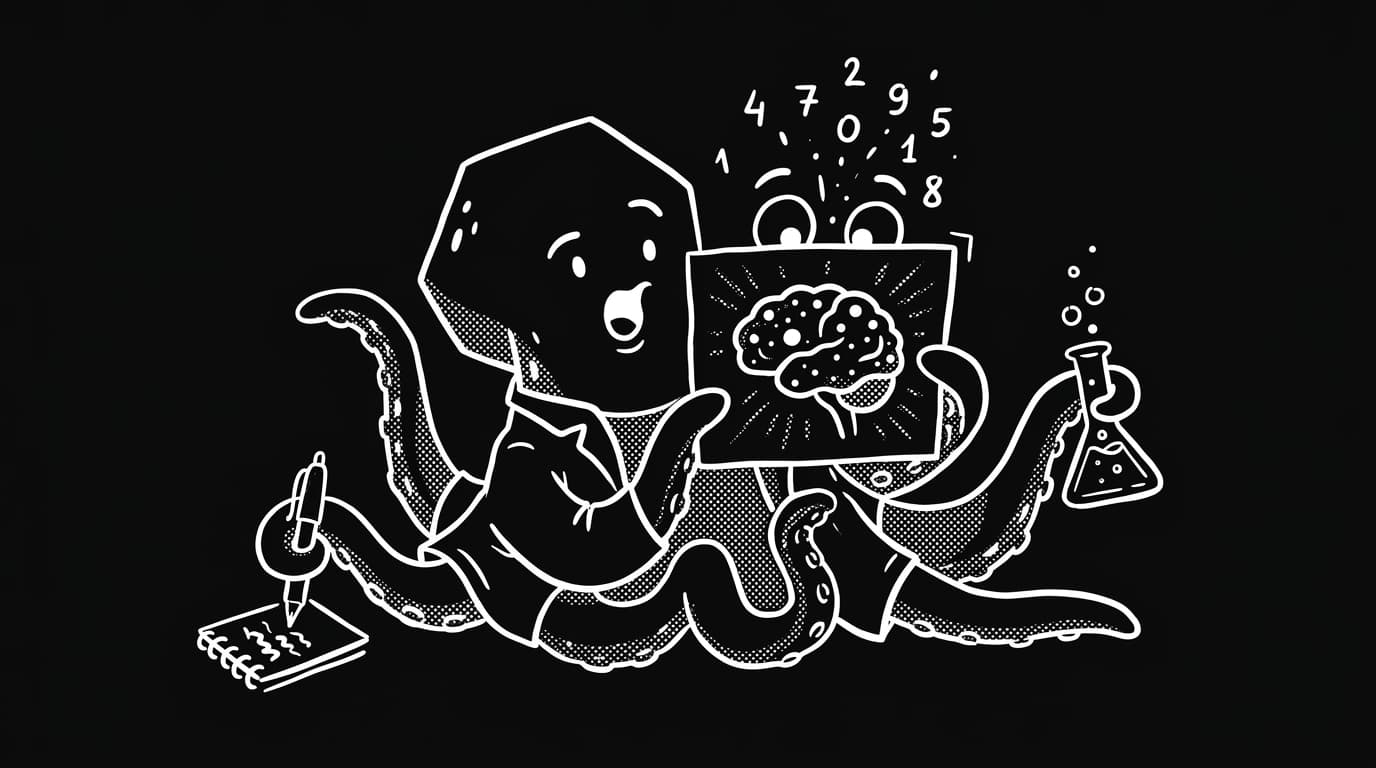
Rüdiger Gamm can raise a two-digit number to the ninth power in under a minute. When neuroscientists slid him into an fMRI scanner in 2001, they expected the usual working-memory hotspots to light up. They found something else. His brain was pulling answers out of long-term memory circuits that untrained volunteers do not recruit for arithmetic at all. That single scan, and the twenty years of follow-up work it seeded, rewrote how researchers think about extreme mental calculation.
The Gamm Study and Why It Mattered
Mauro Pesenti and colleagues published the scan in Nature Neuroscience in November 2001, working with Gamm at a Belgian imaging lab. Twelve non-expert controls performed the same arithmetic tasks in the same scanner. Controls activated bilateral prefrontal cortex, the standard signature of working-memory load, especially during multi-digit multiplication. Gamm hit those regions weakly and recruited five extra areas: right medial frontal cortex, right parahippocampal gyrus, upper anterior cingulate, and bilateral paracentral zones. The parahippocampal signal is the tell. That structure encodes and retrieves episodic memory, the kind of storage a person uses to remember where they parked. Gamm was recalling calculations, not computing them.
The size of the effect surprised the authors. Gamm's working memory scores on standard psychological batteries sat inside the normal adult range. He had no innate scratchpad advantage. What set him apart was a ten-year training habit of four hours a day, starting at age twenty. That length of practice reshaped which circuits carried the load without reshaping the load itself. The finding matched what Anders Ericsson had been arguing about expert performance for a decade, and gave the argument a neural anchor.
How Long-Term Memory Absorbs the Load
Working memory holds around four items for a few seconds. Multi-digit multiplication needs to hold partial products, a running sum, and the original operands at once, which pushes past that ceiling for anyone doing the work from scratch. Experts solve the ceiling problem by not holding partial products in working memory. They retrieve them from a table stored in long-term memory. Ask a strong mental calculator for 47 by 53 and the middle steps do not exist as separate mental events. The answer surfaces the way a phone number surfaces once you have dialed it a thousand times.
A 2018 fMRI study by Jiang and colleagues at Xi'an Jiaotong University scanned nine abacus-trained children against age-matched controls. The trained group showed reduced activation in the intraparietal sulcus and greater activation in visual cortex and hippocampus during three-digit calculations. Same pattern, different training method. The consistent finding across studies is a shift away from parietal-frontal computation and toward memory retrieval, with a secondary shift toward visual imagery for methods that train a mental image such as anzan. Our writeup on abacus mental math covers the training curve behind that second pathway.
What the Intraparietal Sulcus Does and Why It Matters
The intraparietal sulcus, IPS, sits along the top of the parietal lobe and handles approximate number magnitude, the sense that seventeen is closer to twenty than to five. Stanislas Dehaene's group at INSERM has mapped this region across more than a hundred studies since 1998. Untrained arithmetic loads the IPS heavily because every operation touches magnitude comparison. Expert calculators show reduced IPS activation on the same problems, which is counterintuitive until you note they are no longer comparing magnitudes. They are looking up an answer.
This has one practical consequence for anyone building fluency. Training that emphasises magnitude reasoning, such as estimation drills or number-line games, strengthens the IPS. Training that emphasises fast recall, such as timed rounds and pattern-locked reflexes, shifts load off the IPS and onto memory circuits. The two are not opposites, and most calculators need both, but they build different structures. Sessions on the daily puzzle push toward the second pathway, which is why players report the answers feeling automatic after a few weeks rather than easier to compute.
Scott Flansburg and the Missing Scan Data
Scott Flansburg, the American calculator who set the Guinness record in 2000 for the most additions in fifteen seconds using a random two-digit number, has never been scanned in the peer-reviewed literature. He has been filmed for television demonstrations and appears in documentaries, but the neural data does not exist. That gap matters because Flansburg reports a different subjective experience from Gamm. He describes seeing numbers arranged left to right as a visual line, closer to the anzan pattern than the retrieval pattern. Without imaging, the self-report cannot be verified. Extreme calculators are rare enough that most scanning studies are single-subject case reports with all the caveats those carry.
The one broader dataset comes from a 2016 study by Cantlon and colleagues at the University of Rochester on a group of arithmetic prodigies. The Rochester team found individual variation that broke the simple retrieval-versus-computation split. Some experts used memory dominantly, some used a hybrid, and one recruited visual imagery to the near-exclusion of both. Human calculators are not one thing. That heterogeneity also explains why prescriptive training claims from any single calculator tend to fail replication when tested on twenty random adults.
What This Means for Ordinary Training
A recreational player does not need to scan like Gamm to gain from the same principles. The transferable finding is that reflex training changes which circuits do the work, and this happens in months rather than decades at a lower ceiling. A 2019 meta-analysis by Wang and colleagues pooled eleven training studies covering 743 subjects and found consistent left-hemisphere language-area recruitment for trained arithmetic, confirming the retrieval shift at a mass scale. Our research summary on whether mental math improves cognition covers the transfer question, which is a separate argument.
- Reflex tables for small multiplication move load from parietal computation to left-hemisphere retrieval within four to six weeks of daily practice.
- Estimation and magnitude drills strengthen the intraparietal sulcus but do not build the retrieval pathway.
- Visualisation methods such as anzan build a third pathway through visual cortex and hippocampus that transfers to non-arithmetic imagery tasks.
- Working-memory capacity does not increase with arithmetic training in any scanned study, including Gamm's own.
The upshot for a player working through the Mathness menu is that the game is doing something specific to the brain. Timed rounds with immediate feedback are the exact input that shifts arithmetic off working memory and onto retrieval. That shift is visible under fMRI in expert calculators, replicable in trained novices, and stable enough to survive weeks off the game once installed. The leaderboard surfaces the players who have made the shift furthest. What their scans would show, no one has measured yet.