Singapore Math: How Bar Models Build Mental Arithmetic
Parents keep asking why their third grader can solve a word problem on a Singapore primary test but freezes on the same problem rewritten in an American workbook. The answer is the bar model. It is a boxes-and-labels diagram that turns a sentence like 'Mia has three times as many stickers as Noah, and together they have 48' into a picture a seven-year-old can solve in under a minute without algebra. Singapore adopted bar models in its primary curriculum in 1983, and the country has led international math rankings in nearly every TIMSS cycle since 1995. The method travels. Here is what a bar model is, the three problem families it cracks, and the four-week home drill that locks the habit.
What a Bar Model Is
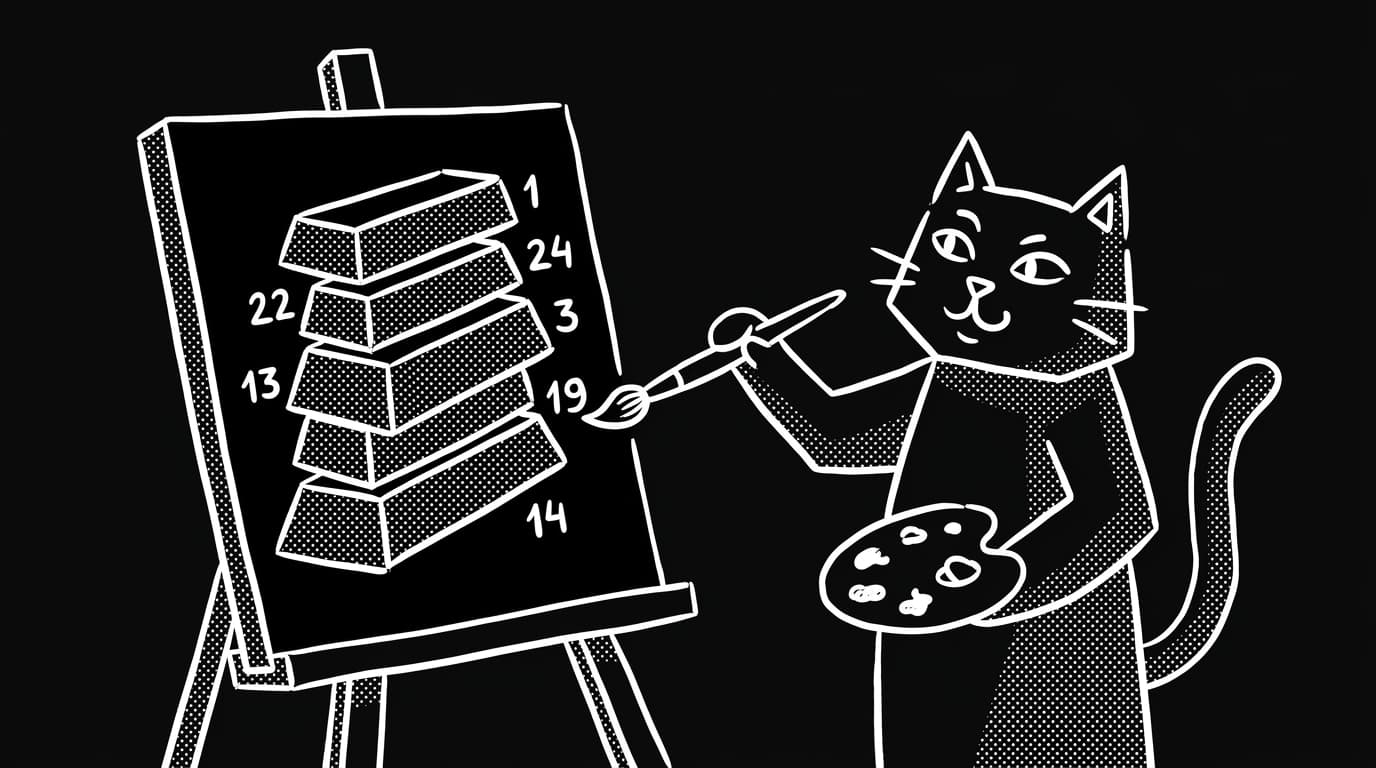
A bar model is a rectangle with a numeric label. Longer rectangle, bigger number. That is the whole mechanic. A child draws one bar for each quantity in the problem, lines them up to show their relationship, and reads the answer off the picture. Singapore Math stacks three variants on top of this single idea: the part-whole model splits one bar into pieces, the comparison model places bars of different lengths side by side, and the change model shows one bar growing or shrinking across time. Nothing on the page uses a variable. Nothing uses an equation. The child computes with the picture, and the arithmetic that drops out is almost always one operation on two small numbers.
The Three Problem Shapes Bar Models Solve
Word problems in grades one through five collapse into one of three shapes. Part-whole covers 'Mia has 7 red marbles and 5 blue marbles, how many in total.' Comparison covers 'Mia has 7 marbles, Noah has 3 more than Mia, how many does Noah have.' Change covers 'Mia had 7 marbles, she lost 3, how many are left.' Students who miss word problems are usually failing at problem recognition, not at arithmetic. A bar-model drawing forces the recognition step onto the page before any calculation begins.
- Part-whole: one bar split into pieces. Fits 'combine' and 'missing part' questions.
- Comparison: two bars of different length. Fits 'more than', 'less than', and 'times as many' questions.
- Change: a before bar and an after bar. Fits gain, loss, and net-change questions over time.
Take the sticker problem as a worked example. Mia has three times as many stickers as Noah. Draw Noah as one unit box. Draw Mia as three identical unit boxes stacked next to Noah's. The total of 48 covers four unit boxes. One unit box is 12. Noah has 12 stickers, Mia has 36. No algebra, no variable, no equation. The same template handles ratios, fractions of a group, and 'x more than y' questions through grade five, and it previews algebraic reasoning in grade six without the symbol wall that stops many students at the gate. A trained second grader can draw this diagram and read off the answer in under 40 seconds.
Why Bar Models Build Mental Arithmetic
Bar models anchor arithmetic in spatial reasoning, which is what the SNARC effect and Stanislas Dehaene's number-line research say the brain already uses to compare numbers. A child reasoning on a drawn bar is practicing the same operation their mental number line runs automatically. The bar is the training wheel for mental math, not a replacement for it. After six to twelve months of consistent bar-model work, Singapore classrooms stop drawing the bars and the students keep the picture in their head. That internal picture is what makes a strong mental calculator fast. The research on math-anxiety reduction also points at bar models as a de-abstraction tool: students who freeze on 2x + 3 = 11 can usually solve the equivalent two-bar diagram in seconds. Our longer piece on number sense covers the broader skill that bar models help build.
Teaching Bar Models at Home: A Four-Week Plan
A parent working ten minutes a day can get a seven-year-old fluent on all three bar-model shapes in four weeks. The pattern is one shape per week for three weeks, with a mixed set in week four. Keep the numbers small at the start, since the limiting factor is picture-building reflex, not arithmetic skill. Have the child name the shape out loud before drawing, which is where most of the carryover to mental arithmetic lives. Grading is binary: did the picture solve the problem, yes or no. If the picture solved it, the child moves on. If not, redraw rather than restate.
- Week 1: five part-whole problems per day, numbers under 50. One bar, two pieces, find the whole or the missing part.
- Week 2: five comparison problems per day, numbers under 100. Two bars side by side, find the difference or the longer bar.
- Week 3: mixed set of 10 problems. Child names 'part-whole' or 'comparison' out loud before drawing anything.
- Week 4: add change problems with before-and-after bars, numbers up to 200. Two bars stacked, one quantity moves.
Where Bar Models Stop and What Replaces Them
Bar models hit a wall in two places. The first is problems with more than three or four quantities, where the drawing eats the page and attention fragments. The second is multi-step problems that require intermediate storage, where a bar model and a mental tally fight for the same working-memory slot. Teachers in Singapore shift students off bar models somewhere in grade five, replacing the drawn bars with named variables. The transition only works if the child has internalized the picture, which is the whole point of the earlier drill. For adults rebuilding mental arithmetic from a weak foundation, the shortcut lives in our adult rebuild plan rather than in Singapore primary materials, and for younger learners the age-band picks are mapped out in our grade-by-grade guide.
How the Bar-Model Habit Plugs Into Target-Number Play
The bar-model habit transfers directly to target-number games. When a round shows the target 48 above the tiles 3, 12, 4, and 1, a bar-trained player sees '12 times 4' as a four-unit bar landing exactly on the target, and the round closes in two seconds instead of eight. The same spatial reflex drives timed modes on the free daily puzzle and climbs the leaderboard in ranked play. Players who struggled through long division in school often turn out to think in bars once asked, and a few weeks of explicit bar-model drill restores a mental-calculation pipeline that no amount of multiplication-table recitation ever filled. The free menu has daily and ranked modes built around the same instant-recognition skill the bar model trains.