Working Memory and Math Ability: Why Some Kids Struggle
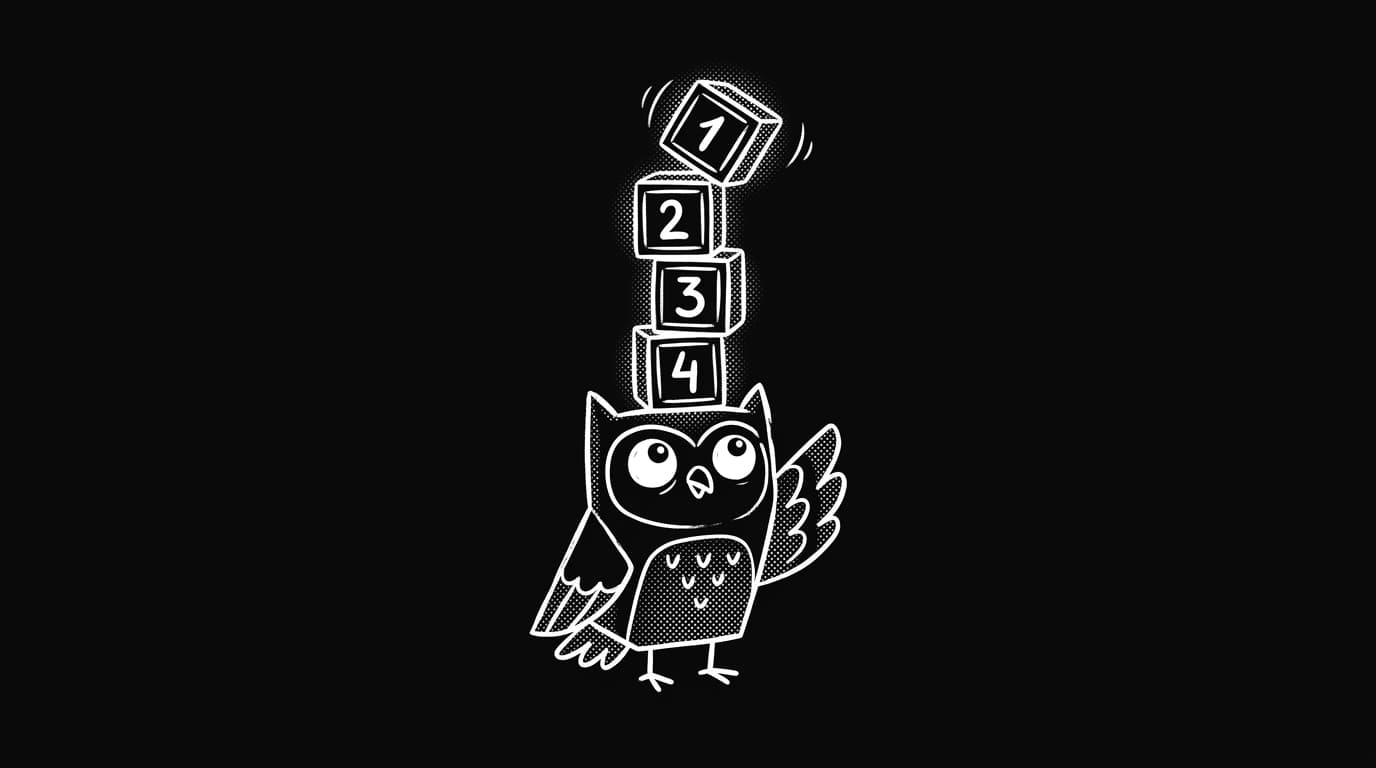
A child who freezes on 47 plus 28 is not bad at addition. In most cases the working memory buffer collapsed before the answer arrived. Working memory is the four-to-seven slot mental scratchpad every arithmetic step lives inside, and it decides whether a kid finishes the calculation or loses the target halfway through. This is the cognitive layer under every math struggle that looks like a knowledge gap and is not one.
What Working Memory Holds During Arithmetic
Alan Baddeley's model splits working memory into a phonological loop for words and numbers spoken silently, a visuospatial sketchpad for shapes and positions, and a central executive that switches attention between the two. A typical seven-year-old holds around four items in each buffer for roughly two seconds without rehearsal. An eleven-year-old climbs to five or six items. An adult peaks near seven, and stress or fatigue drops the count by one or two. Every arithmetic problem consumes slots for the operands, the running total, the carries, and the target. On a two-digit addition like 47 plus 28, a child must hold four separate values while executing the ones-column add. Miss one slot and the answer drifts by ten or thirty.
The Cognitive Load That Breaks Math
Cognitive-load theory from John Sweller separates intrinsic load, which is the math itself, from extraneous load, which is the format and noise and language wrapped around it, and from germane load, which is the effort of building schemas. Math anxiety hits the executive first and burns two of the four slots on threat monitoring, which is why an anxious child can solve a problem verbally that they fail on a timed sheet. A worksheet with dense instructions burns another slot on parsing. By the time the child reaches the calculation, the buffer is already at capacity, and the failure looks like a math problem when the mechanism is memory.
The load also compounds across a session. Twenty minutes of sustained mixed arithmetic depletes the executive faster than twenty minutes of a single operation, because every switch costs a reset. Kids who look strong on the first five problems and collapse on problem eight are almost always hitting a load ceiling, not a skill wall. The same child, given a single-operation block, holds the pace for the full twenty.
Load Spikes That Stall Arithmetic
- Word problems that hide the operation behind three sentences of context, forcing a parse before any calculation begins
- Timers that force parallel monitoring of an external clock and the internal running total
- Boards with visual clutter that pull the sketchpad away from the numbers it needs to hold
- Language switches that force translation from the child's home tongue before computation
- Fatigue after twenty minutes of sustained arithmetic, which drops effective capacity by one slot
How Chunking Rebuilds Capacity
Chunking is the technique that lets a chess master hold twenty pieces in the same slot count a beginner uses for four. In arithmetic the equivalent is turning 47 plus 28 into 47 plus 30 minus 2, which trades three active slots for two. Number bonds to ten and one hundred collapse pairs like 63 plus 37 into a single recognized unit, so the child stores one fact instead of two operands and a rule. Times tables memorized to automatic recall free the entire executive for the harder step of a longer problem. A kid who has 7 times 8 as one retrieval instead of a computation runs a two-step long multiplication with the buffer half empty.
Chunking is trainable and cheap. Five minutes a day on number bonds and single-digit products lifts effective capacity within four weeks, and the gain shows up first on the problems the child was already close to solving. The lift is not from more slots but from bigger contents inside the same slots, which is the same trick a musician uses to hold a full bar of notes as one chunk instead of eight.
What Parents and Teachers Can Do
Reducing extraneous load is the fastest win. Read the word problem out loud so the child does not spend slots on decoding the sentence. Break the calculation into visible steps on paper so the running total lives outside the head. Practice single-skill blocks before mixing operations, since mixed sets force the executive to switch modes on every problem. Build automaticity on the small facts first, because every unmemorized fact costs a slot mid-computation. For older kids who have hit the arithmetic wall, five focused minutes on the Mathness daily puzzle builds executive endurance without triggering the anxiety loop that a graded worksheet triggers, because the format is short and the failure is private.
When the struggle persists across every intervention, screen for dyscalculia rather than pushing harder on drill. The dyscalculia and number games breakdown covers the formats that build fluency in that population and the design choices that trigger shutdown. Working-memory support and dyscalculia support overlap on chunking and format simplification, and diverge on the pace of exposure to novel operations.
Games That Train the Right Loop
Not every math game trains working memory. A calculator-style app trains recognition, not manipulation, and leaves the buffer idle. What builds capacity is short-round arithmetic where the child holds three or four numbers across a decision. Target-number puzzles like the ones in the Mathness menu force the sketchpad to hold candidate operations while the executive tests them against the target, which is the exact loop weak arithmetic students skip. Speed-drill formats train phonological rehearsal by looping small facts under mild time pressure, and the mild pressure is the point, because heavy pressure recruits the anxiety response and empties the buffer.
Match the format to the age. A seven-year-old needs two-operand rounds with visible tiles. An eleven-year-old handles three-operand rounds and benefits from a short timer. Grade-matched picks and the reasoning behind each age band live in the grade-by-grade mental math guide, which pairs each grade with a target format and the failure signs to watch for. The right game keeps intrinsic load high and extraneous load near zero, so every slot the child has goes into the math.